Automated Material Handling: Systems, Types & Solutions
Every square foot, pick, and labor hour comes at a price, and keeping them under control gets harder as order volumes grow.
That’s pushing more manufacturers and distributors to automate how materials are stored, transported, and tracked across warehouses, production lines, and distribution operations.
The automated material handling equipment market was valued at $33.39 billion in 2025 and is projected to reach $51.22 billion by 2030. Much of that growth comes down to rising eCommerce demand, ongoing labor shortages, and the need to get orders out the door faster.
Instead of relying on additional headcounts to increase capacity, companies are using automation to handle more inventory with less manual effort.
However, deciding where automation fits into your operation starts with understanding what these systems can do and where they can have the greatest impact.
In this article, we will:
- Explore how automated material handling works
- Cover the systems available and their key benefits
- Discover when it might be time to automate and what to consider when choosing a system for your operation
Make material handling easier with Modula.
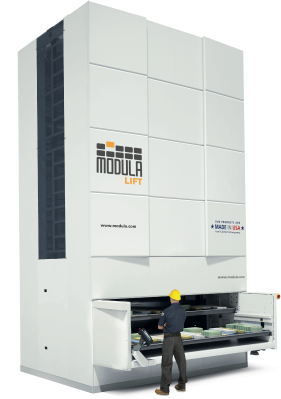
Automated Material Handling Explained
Automated material handling uses computer-controlled equipment and software to automate tasks such as moving, storing, retrieving, sorting, and tracking materials within warehouses, manufacturing facilities, and distribution centers.
Depending on the application, these technologies can automate individual tasks or work together as part of a larger material handling system.
How Do Automated Material Handling Solutions Work?
Automated material handling brings software, tracking tools, and machinery together so materials can move through a facility without relying on constant manual handling.
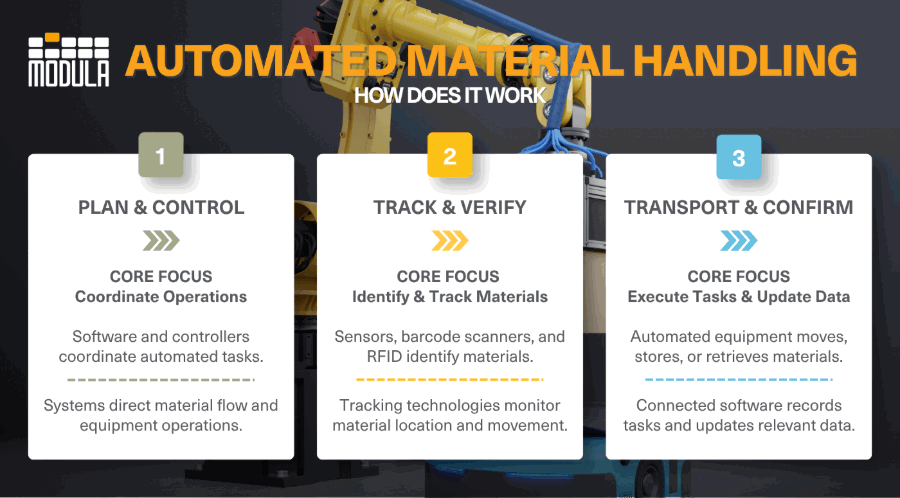
The process typically involves three stages:
Plan and Control
Depending on the system, warehouse management system (WMS), warehouse control system (WCS), and equipment-level controllers work together to coordinate material handling operations.
These technologies help determine which materials need to move, where they should go, and how automated equipment should execute the required tasks.
Want to see how these warehouse systems connect? Our guide to WES vs. WMS vs. WCS explores what each system does and how they work together.
Track and Verify
Sensors, barcode scanners, and RFID technology help automated material handling solutions identify materials and track their location, movement, and status throughout the facility.
Transport and Confirm
Conveyors, automated guided vehicles (AGVs), warehouse robots, or other equipment execute the assigned task.
Once completed, the system records the movement and updates inventory or workflow data accordingly.
This continuous exchange between software and equipment can help facilities:
- Coordinate material movement
- Maintain accurate inventory records
- Reduce delays caused by manual handling
4 Types of Automated Material Handling Systems
Automated material handling can take different forms depending on the materials being handled, how frequently they need to be transported, and how the facility operates.
Common automated material handling systems include:
Automated Storage and Retrieval Systems (ASRS)
Automated storage and retrieval systems use computer-controlled equipment to automatically store and retrieve materials from designated storage locations.
These systems can handle different types of loads, from small parts and totes to cases and pallets, depending on the technology. Common types include crane-based systems, shuttles, vertical lift modules, and horizontal and vertical carousels.
By automating storage and retrieval, ASRS can reduce manual handling, improve space utilization, and deliver inventory to operators or other automated equipment when needed.
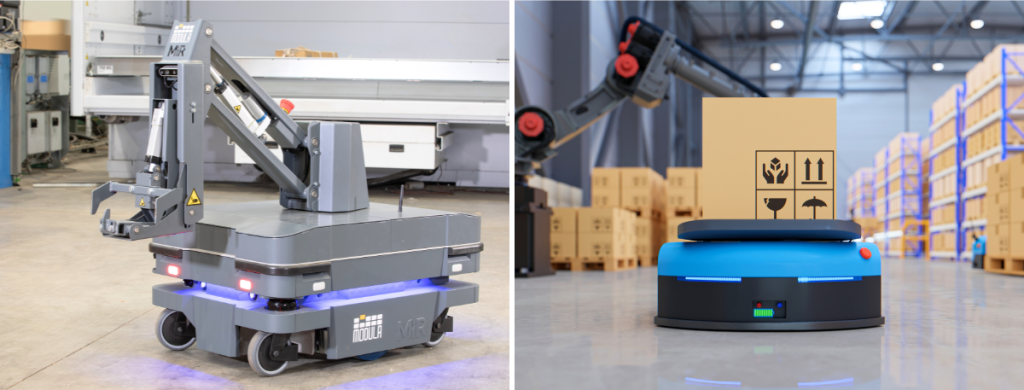
Automated Guided Vehicles (AGVs) and Autonomous Mobile Robots (AMRs)
Automated guided vehicles and autonomous mobile robots transport materials between workstations, storage areas, production lines, and other points within a facility.
AGVs typically follow predefined paths or guides, while AMRs use sensors and mapping technology to navigate more dynamically and adjust their routes around obstacles.
Conveyor and Sortation Systems
Conveyor systems move cartons, totes, packages, or other materials along fixed routes.
Sortation equipment directs those items to the correct destination based on information such as barcodes, order details, or shipping location.
They’re commonly used for high-volume, repeatable material flows.
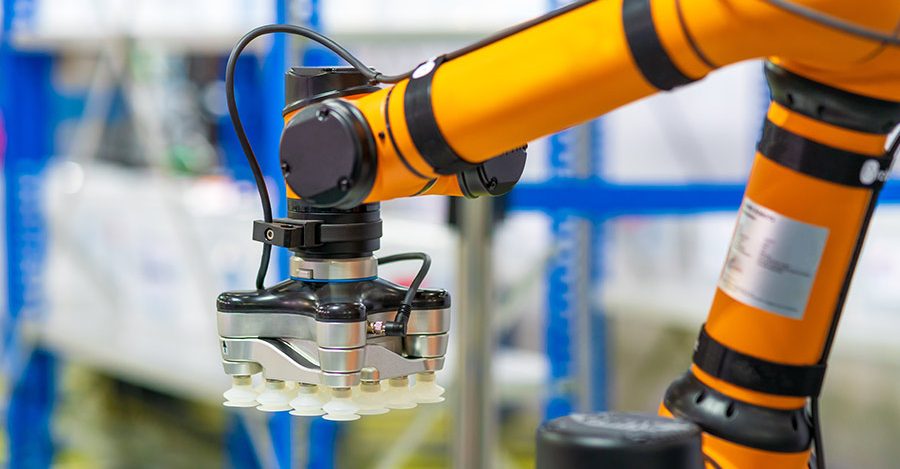
Robotic Picking Systems
Robotic picking systems use robotic arms, equipped with grippers and, in many applications, vision technology to identify, pick, and place individual items or cases.
These systems can automate repetitive tasks such as order picking, sorting, and transferring products between containers or conveyors. Other robotic applications can support packing and palletizing operations.
Fully Automated vs. Semi-Automated Material Handling
Not every facility needs the same level of automation. Some processes can run with little human input, while others still benefit from hands-on support.
Here’s how fully automated and semi-automated material handling compare:
| Factor | Fully Automated | Semi-Automated |
|---|---|---|
| Human Involvement | Minimal operator intervention during automated tasks | Operators perform selected tasks alongside automated equipment |
| Process Execution | Multiple handling tasks can be completed automatically | Equipment automates specific tasks while others remain manual |
| Typical Applications | Automated storage, transport, and robotic handling workflows | Goods-to-person picking, assisted picking, and automated transport with manual loading or unloading |
| System Complexity | May require more extensive equipment and software integration | Can be implemented as a standalone system or integrated into a larger workflow |
| Initial Investment | Often higher for complex, integrated installations | Can offer a more gradual entry into automation |
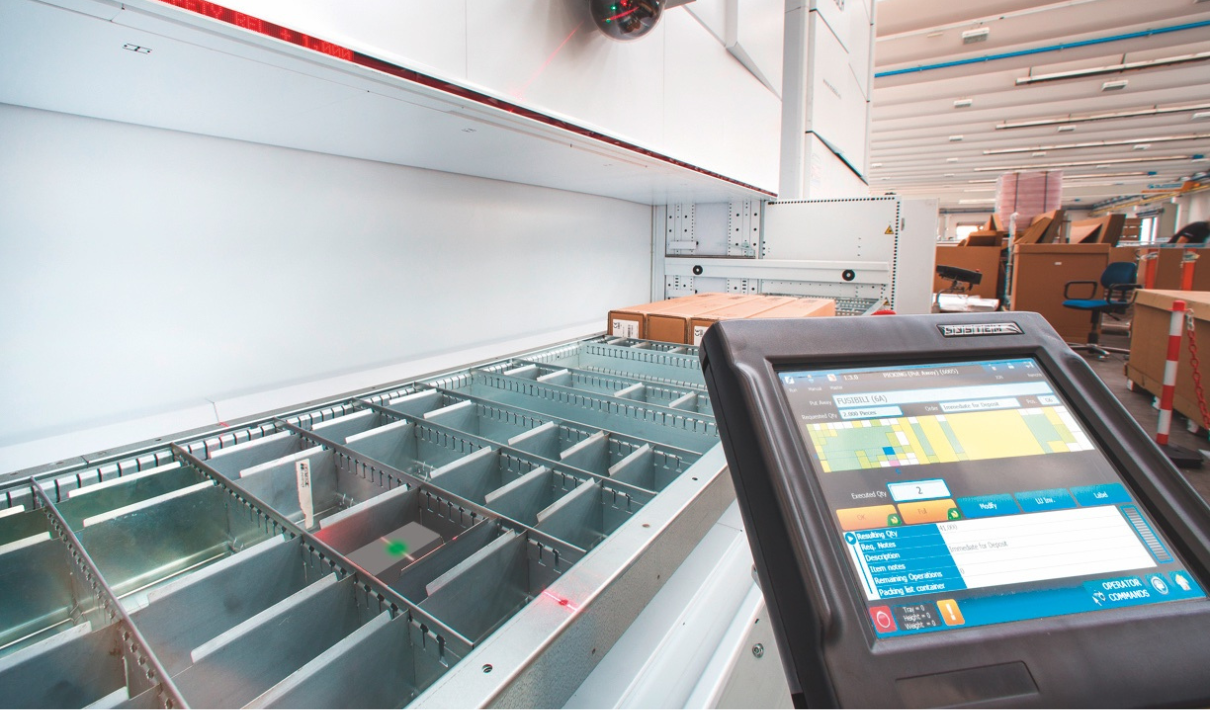
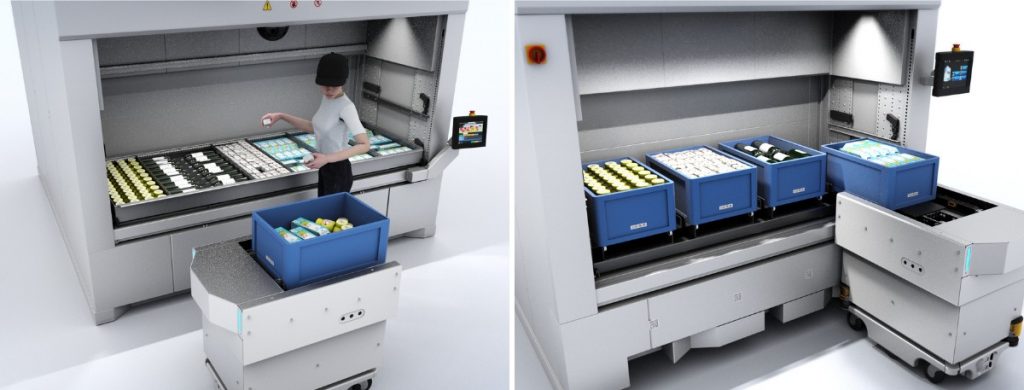
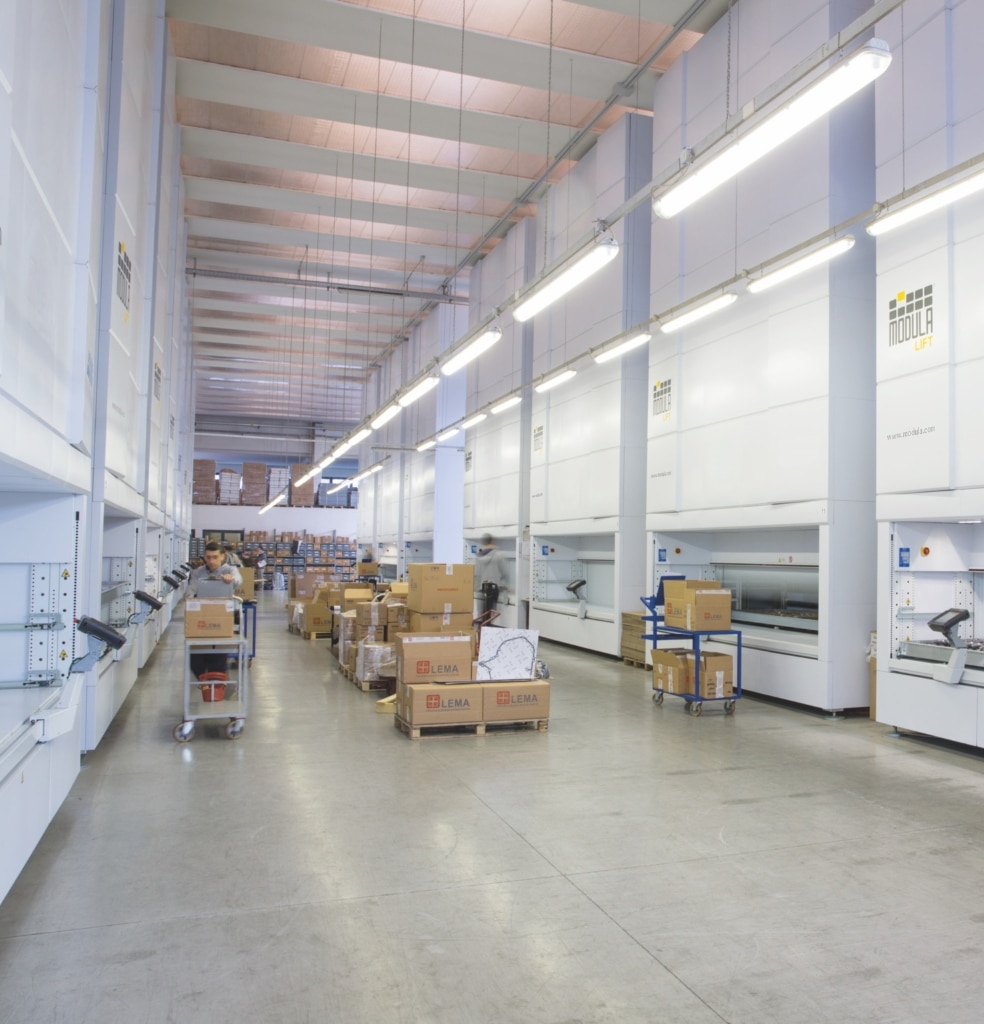
For example, a Modula Vertical Lift Module (VLM) can automatically retrieve inventory while an operator picks the required items and an autonomous mobile robot (AMR) transports them to another area.
In more advanced configurations, robotic picking and automated material transport can be integrated with the VLM to further reduce manual intervention.
This illustrates how different technologies can work together to support varying levels of automation, depending on operational needs.
Take the next step toward smarter material handling.
Top Benefits of Automated Material Handling Solutions
The value of automation shows up across the entire operation, from how inventory is stored to how much time workers spend handling it.
Benefits of automated material handling solutions include:
Recover Floor Space
Instead of letting inventory take over more of the floor, vertical storage solutions put unused overhead space to work.
That leaves more room for production, packing, staging, or growth within the existing facility.
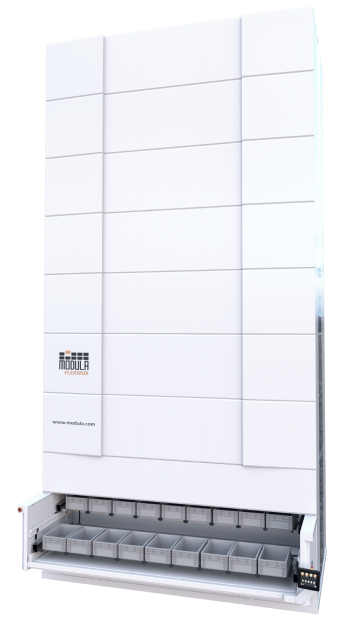
Modula Vertical Lift Modules use available ceiling height to store inventory in a compact footprint. Modula Lift configurations can reach up to 68 feet tall and reduce the floor space required for storage by up to 90% compared to traditional shelving.
Their modular design also allows certain configurations to be adapted to changing space requirements, including height modifications or relocation when needed.
Increase Picking Speed
Goods-to-person systems bring inventory directly to the operator, minimizing time spent walking, searching, and retrieving items.
Workers can complete more picks from a single station, helping boost throughput without adding the same amount of labor.
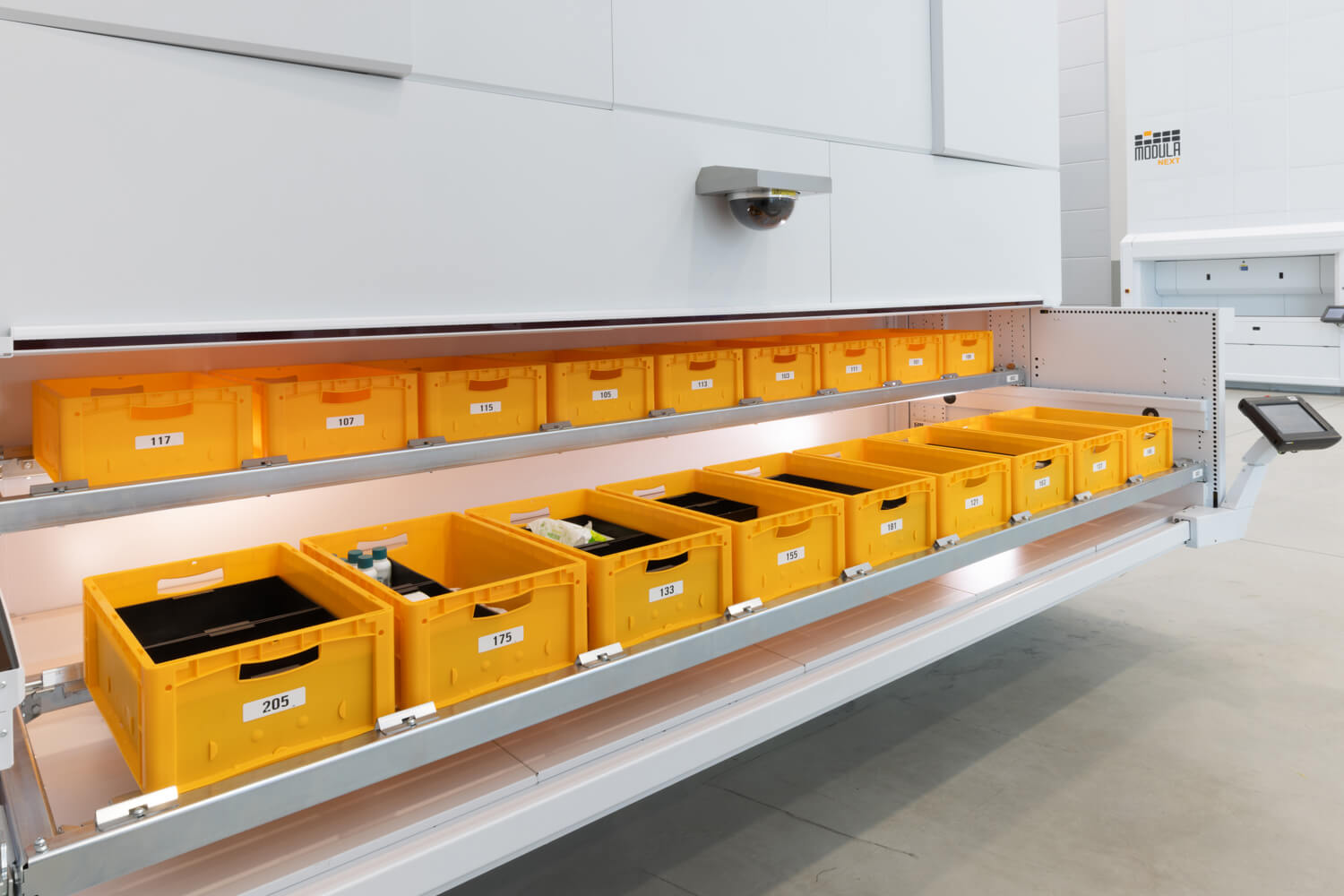
Modula vertical lift modules (VLMs) automatically present the required trays at an ergonomic access bay, while visual picking aids help operators quickly identify the correct items.
Depending on the configuration and picking process, Modula VLMs can achieve up to 200 picking lines per hour.
For high-volume applications with limited ceiling height, Modula horizontal carousels offer another option, with picking rates of up to 550 lines per hour.
Lower Picking Errors
Pick-to-light systems, barcode scanning, and screen-guided instructions help operators identify the correct items and quantities during picking.
By reducing picking mistakes, these technologies can help minimize order inaccuracies, unnecessary reshipments, and inventory discrepancies.
Reduce Labor Requirements
Automation handles repetitive movement and retrieval tasks, reducing the need for workers to travel throughout the facility.
This allows businesses to handle higher order volumes with their existing workforce, reduce reliance on additional labor, and reallocate employees to higher-value activities.
Improve Workplace Safety
Automated systems decrease repetitive lifting, bending, reaching, climbing, and walking by bringing products directly to ergonomic workstations.
That matters in material handling: a recent workplace safety index ranks overexertion involving outside sources as the leading cause of serious workplace injuries in the U.S., accounting for $13.7 billion in annual costs.
Strengthen Inventory Control
Automated storage systems can track each storage and retrieval transaction while limiting access to authorized users.
This provides more accurate inventory records, greater traceability, and better visibility for replenishment and stock planning.
Recover Valuable Floor Space
Increase Picking Speed

Lower Picking Errors
Reduce Labor Requirements

Improve Workplace Safety
Strengthen Inventory Control
Signs It’s Time To Automate Your Material Handling
Warehouse automation starts to make sense when manual processes are creating problems that are difficult to solve by simply adding more people or equipment.
You should start thinking about automation when:
- Orders or production processes are taking longer: Employees spend too much time walking, searching for inventory, or waiting for materials, making it harder to keep up with order volumes or production schedules.
- Picking errors are becoming expensive: Frequent mispicks, inventory discrepancies, returns, or reshipments may point to gaps in manual picking and tracking.
- Labor is getting harder to manage: You’re adding shifts or overtime just to maintain throughput, or repetitive handling tasks are contributing to high turnover and staffing challenges.
- You’re running out of usable floor space: Shelving and aisles are consuming space you could use for production, packing, or staging. Vertical automated storage can help use more of the facility’s available height.
- Manual handling is creating safety concerns: Workers regularly lift heavy items, climb ladders, reach overhead, or walk long distances to retrieve inventory, increasing physical strain and exposure to injury.
- Peak periods overwhelm your current setup: Normal days run smoothly, but seasonal spikes or large orders quickly create backlogs. Automation can add capacity without requiring the same increase in manual labor.
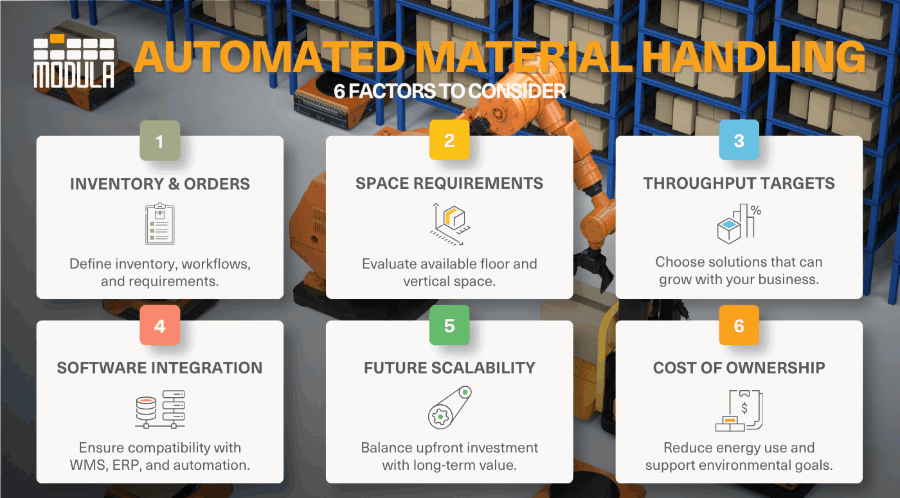
How To Choose the Right Automated Material Handling System
The best place to start is with your operation itself: what you’re transporting, where the slowdowns happen, and which processes would benefit most from automation.
Here’s how to find the right automated material handling system:
Profile Your SKUs and Order Patterns
Look at what you actually handle each day: product size and weight, SKU count, order volume, and how quickly inventory turns.
For instance, different ASRS technologies are designed to handle different load sizes, weights, and picking requirements, making it important to match the system to your inventory characteristics.
Measure Your Vertical and Floor Constraints
Measure beyond available floor space. Ceiling height, column spacing, aisle width, and floor load capacity can all narrow your options.
A facility with high ceilings might make better use of a vertical lift module, while a lower-ceiling space could be better suited to horizontal carousels or conveyors.
Set Throughput Targets
Start with your busiest periods, not your average day.
If you normally process 500 orders but reach 1,000 during seasonal peaks, the system needs enough capacity to handle those surges without creating a new bottleneck.
Check Integration With Your Existing Software
Check how the system will connect with your ERP, WMS, or inventory management system.
Orders, inventory updates, and completed picks should move between systems without employees having to re-enter data or maintain separate records.
Want to dig deeper into how a WMS handles inventory, orders, and day-to-day warehouse operations? Check out our complete guide to warehouse management systems.
Leave Room To Grow
Think about what happens if order volume doubles, your SKU mix changes, or you add another production line.
Modular systems that allow you to add storage, robots, workstations, or conveyor sections can make expansion easier without replacing the original setup.
Look Beyond the Purchase Price
Compare the full cost of owning and operating each warehouse system, including installation, software, maintenance, energy use, training, and potential downtime.
Lead time matters too: a less expensive system might not be the better deal if a long installation schedule delays the productivity gains you need.
Also evaluate the availability of technical support, spare parts, and preventive maintenance services to help minimize operational disruptions over the system’s lifetime.
Automated Material Handling: Key Takeaways
- Automation keeps materials moving with less manual work. Software, tracking tools, and equipment work together to store, transport, and track inventory.
- Automation can improve several areas of warehouse operations, from saving space and speeding up picking to reducing errors, lowering labor needs, and improving inventory control.
- The right system depends on how you operate. Your SKUs, available space, peak volume, software, and plans for growth should shape your choice.
Automated Material Handling: FAQs
What is the difference between material handling and automated material handling?
Traditional material handling relies more heavily on workers to transport, store, pick, and retrieve goods.
Automated material handling uses software and equipment to take over some or most of those repetitive tasks.
How much do automated material handling systems cost?
Costs vary based on the equipment, facility size, throughput requirements, software integration, and installation.
Look beyond the initial price and consider maintenance, training, energy use, and expected downtime when comparing systems.
Can automated material handling work with existing warehouse software?
Yes, many systems can integrate with ERP, WMS, and inventory management platforms.
The goal is to keep orders, inventory updates, and picking data connected without requiring employees to enter the same information in multiple systems.
Have more questions about automated material handling systems?