Inventory Optimization: Strategies, Software & Warehouse Solutions
Optimizing inventory matters more than ever as customer demand, supplier lead times, order volumes and warehouse operations become increasingly unpredictable.
This is one reason many companies are investing more in supply chain technology. According to the 2025 MHI and Deloitte Annual Industry Report, 55% of supply chain leaders are increasing their investment in supply chain technology and innovation, and 60% plan to invest more than $1 million.
That’s where inventory optimization proves its worth.
The better businesses can anticipate demand, monitor inventory movement, and manage replenishment, the easier it becomes to keep products available, avoid order fulfillment delays, and reduce unnecessary inventory costs.
In this article, we will:
- Cover the core components of inventory optimization and the best practices businesses use to improve inventory accuracy
- Discover why inventory optimization plays such an important role in modern warehouse and eCommerce operations
- Explore Modula’s warehouse optimization software and solutions designed to improve warehouse visibility and inventory control

What Is Inventory Optimization?
Inventory optimization is the process of keeping the right amount of stock available to meet demand without tying up too much cash, space, or labor in excess inventory.
It helps businesses balance product availability, replenishment timing, storage capacity, and fulfillment needs, so they can reduce stockouts, avoid overstocking, and keep inventory moving efficiently through the warehouse.
4 Components of Inventory Optimization
Finding the right inventory balance takes careful planning. Too much stock can tie up cash and storage space, while too little can lead to delayed orders and frustrated customers.
To stay prepared, businesses need to manage several moving parts, including storage capacity, current inventory levels, supplier lead times, seasonal demand shifts, and upcoming promotions.
Let’s take a look at the core areas involved in inventory optimization:
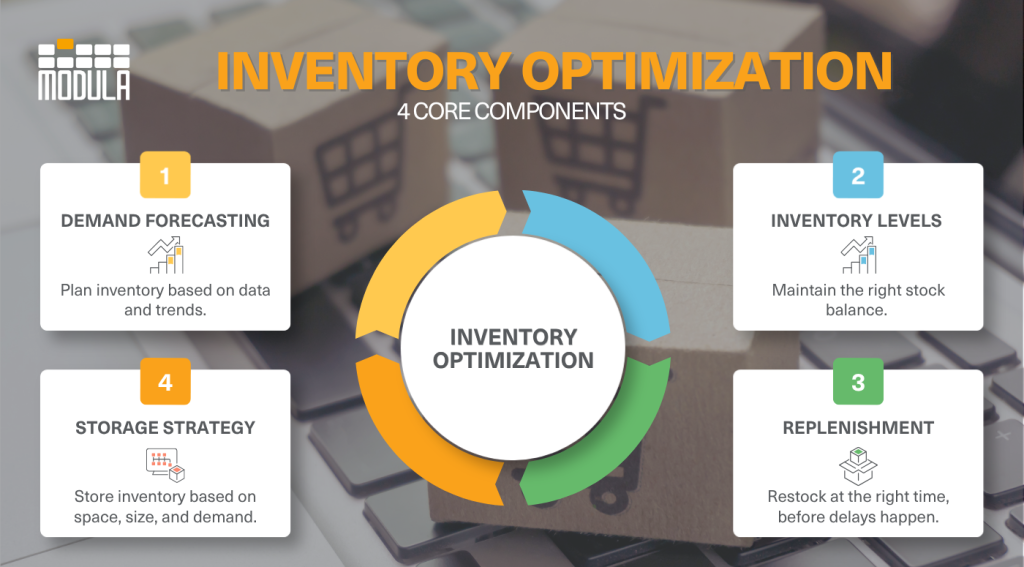
Demand Forecasting
Demand forecasting uses historical sales data, buying patterns, and market trends to estimate future product demand.
These insights help businesses make smarter inventory decisions, from adjusting stock levels to planning purchases more effectively.
While demand forecasting is never perfectly accurate, it can significantly reduce stockouts, prevent shelves from overflowing with excess inventory, and keep customers happier with more consistent product availability.
Inventory Levels
Maintaining the right inventory balance is key to running an efficient warehouse. Too much stock ties up cash and storage space, while too little can leave customers empty-handed and orders delayed.
Keeping the right amount of each product in stock helps minimize common inventory issues, from high storage costs to out-of-stock items.
Healthy inventory levels also help keep cash flow moving, make better use of warehouse space, and create a smoother customer experience with fewer fulfillment delays.
Inventory Replenishment
Inventory replenishment is the process of restocking products as inventory levels start to run low.
This can include moving items from back-stock storage to picking shelves or ordering additional inventory from suppliers and manufacturers.
An efficient replenishment process helps keep products flowing smoothly from storage to shipment, so orders can be picked, packed, and sent out without delays.
Restocking at the right time also helps businesses avoid backorders, shipping slowdowns, and last-minute inventory shortages.
Inventory Storage
How and where inventory is stored can make a bigger difference than many businesses realize.
A well-organized and cost-effective storage system helps keep products moving consistently, orders flowing smoothly and customers satisfied as your business continues to grow.
Storage needs can vary quite a bit depending on sales volume, product size and shipping locations.
What works for one warehouse might not work for another, which is why a smarter, more strategic storage setup plays such a big role in inventory optimization.
Why Inventory Optimization Matters for Warehouse and eCommerce Operations
Managing inventory across warehouses, fulfillment centers, and supply chain networks has become increasingly complex.
Between shifting demand, supplier delays, labor constraints and ongoing supply chain disruptions, keeping the right products in stock is easier said than done.
The good news is that the right tools, technology, and inventory strategies can help businesses anticipate sudden changes while continuing to meet demand and control logistics costs.
Here are five reasons businesses are putting more focus on inventory optimization than ever before:
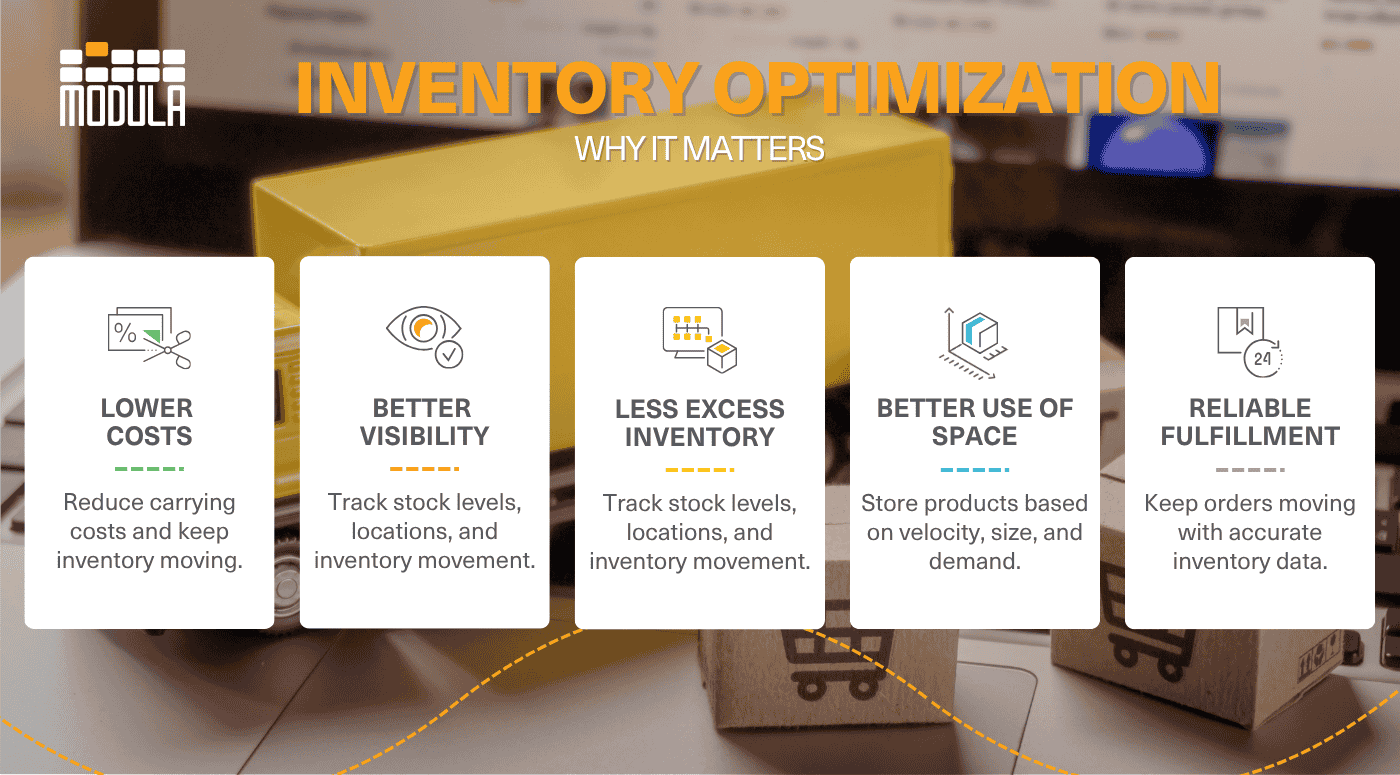
Lower Operational Costs
Inventory optimization can have a major impact on day-to-day operating costs.
Expenses tied to storage (like inventory carrying costs) and warehouse inventory management often increase when products sit too long on shelves or businesses store inventory inefficiently.
By improving inventory flow, businesses can better identify which products are moving quickly, which items are moving slowly, and where inventory should be stored based on demand.
This helps minimize carrying costs, free up warehouse space, and keep products moving instead of sitting around longer than they should.
Improve Inventory Accuracy and Visibility
Inventory optimization gives businesses a clearer view of what is in stock, where products are stored, and how inventory is moving across the operation.
With better visibility, warehouse and supply chain teams can identify slow-moving items, respond faster to demand changes, and make more informed decisions about replenishment, storage, and order fulfillment.
This helps reduce guesswork and gives businesses more control over inventory performance across one or multiple warehouse locations.
Reduce Excess Inventory
Without the right inventory data and planning tools, businesses often end up overstocking products simply to avoid running out, even if it means tying up more cash and storage space than necessary.
While that might sound like a good backup plan, excess inventory can quickly lead to higher carrying costs, crowded storage space and deadstock that never gets sold.
Products can lose value for all kinds of reasons, from changing seasonal demand to expiration dates or shifting customer trends.
Inventory optimization helps businesses avoid overbuying by keeping stock levels more aligned with actual demand, so products keep moving instead of collecting dust on warehouse shelves.
Improve Space Utilization
Inventory optimization is also closely connected to how warehouse space is used.
This matters because warehouse space is becoming more expensive. According to the 2025 Warehousing Market Report, the yearly cost per square foot of warehouse space increased from $8.31 in 2024 to $9.30 in 2025.
When businesses understand product velocity, storage requirements, and replenishment needs, they can store inventory more strategically and avoid wasting valuable floor space on slow-moving or poorly organized stock.
This helps create a more efficient warehouse layout, improve access to high-demand items, and make better use of available storage capacity.
Enable Faster and More Reliable Fulfillment
Inventory optimization helps businesses place products where they are needed most and keep inventory data accurate as orders move through the warehouse.
Reliable fulfillment is becoming just as important as speed. According to McKinsey, 90% of consumers are willing to wait two to three days for deliveries, especially if it helps them avoid shipping costs.
Many are also willing to trade slightly slower delivery for more confidence that orders will arrive within the promised delivery window.
By tracking SKU performance across different warehouse locations, companies can position inventory more strategically to support faster, more reliable picking, packing, and shipping and lower delivery costs.
Since inventory levels are always shifting, technology, and automation help keep everything accurate and moving smoothly, especially across multiple facilities.
Inventory Optimization Strategies
Smart inventory optimization strategies make it easier to keep inventory under control, avoid costly stock issues, and ensure orders are moving without unnecessary slowdowns.
Here are some inventory optimization strategies businesses use:
ABC Analysis
Not all inventory needs the same level of attention.
ABC analysis is a strategy that groups products based on their value and demand, helping businesses focus more closely on high-priority items while spending less time managing lower-value stock.
Instead of treating every SKU equally, businesses can prioritize the products that have the biggest impact on revenue and operations.
Demand Forecasting
Demand forecasting helps businesses estimate future product demand using historical sales data, buying patterns, and seasonal trends.
While forecasts are never completely perfect, they make it much easier to plan inventory levels more accurately and avoid getting caught off guard.
Better forecasting can help reduce stockouts, prevent excess inventory, and improve the overall customer experience.
Safety Stock Management
Safety stock acts as a backup plan when demand suddenly spikes or supply chain disruptions slow things down.
Keeping extra inventory on hand for key products helps businesses avoid running out of stock during unexpected situations.
The challenge is finding the right balance, since too much safety stock increases storage costs while too little can lead to fulfillment delays.
SKU Rationalization
Over time, product catalogs can become overcrowded with slow-moving or low-performing SKUs.
SKU rationalization helps businesses identify which products are worth keeping and which ones might be taking up unnecessary space and resources.
By simplifying inventory, businesses can improve inventory flow, lower carrying costs, and make better use of warehouse space.
Just-in-Time Inventory (JIT)
Just-in-Time (JIT) inventory focuses on receiving products only when they’re needed instead of storing large amounts of extra stock.
For the right operations, this can help businesses lower storage costs, free up warehouse space, and keep inventory moving more efficiently.
Since there’s less room for error, JIT works best when businesses have reliable suppliers and accurate demand forecasting in place.
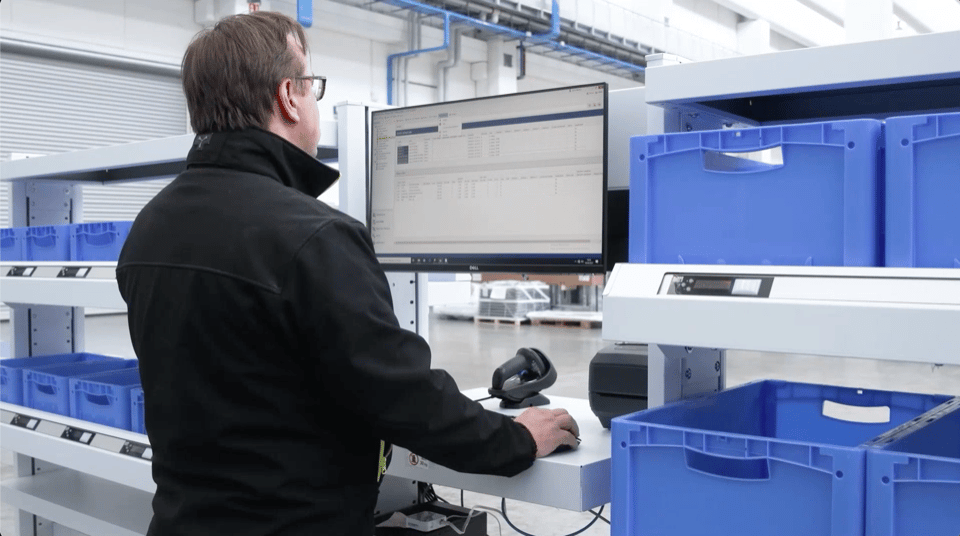
Simplify operations with reliable inventory management solutions.
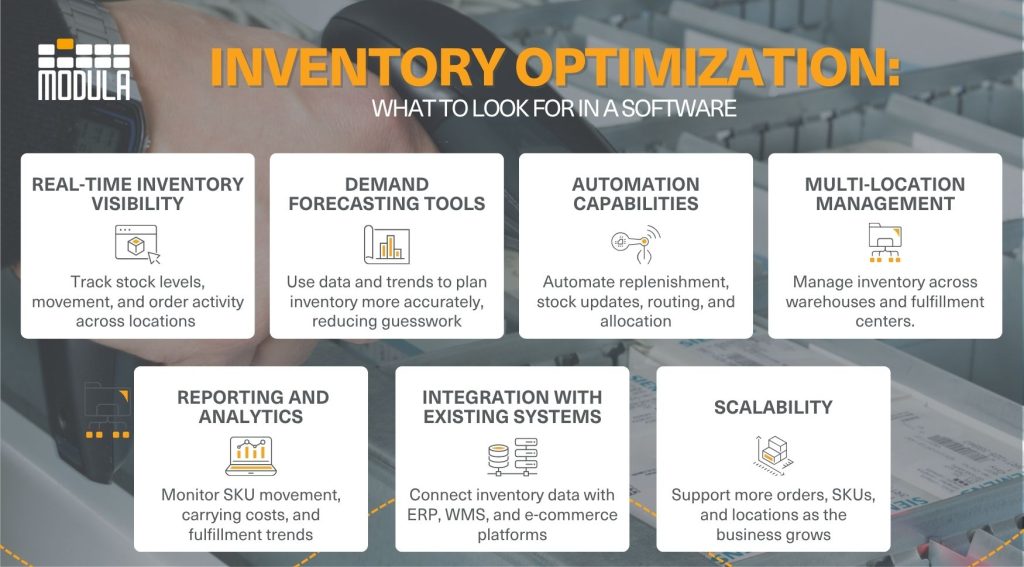
Inventory Optimization Software: What To Look For
Inventory optimization software does more than track products on shelves.
The right platform can help businesses stay ahead of demand changes, make faster inventory decisions, and avoid many of the costly issues that come with overstocking or stockouts.
When comparing inventory optimization software, here are a few features worth paying attention to:
Real-Time Inventory Visibility
Real-time inventory tracking gives businesses a clear view of stock levels, inventory movement, and order activity across warehouse locations.
With more accurate inventory data, businesses can respond faster to demand changes, avoid stockouts, and reduce excess inventory before it becomes a problem.
Demand Forecasting Tools
Good inventory software should help businesses forecast demand using historical sales data, buying trends, and seasonal patterns.
While forecasting is never perfect, stronger data insights can make inventory planning far more accurate and reduce the guesswork behind purchasing decisions.
Automation Capabilities
Automation helps simplify time-consuming inventory tasks with features like replenishment alerts, stock updates, order routing, and inventory allocation.
By automating repetitive processes, businesses can improve accuracy, save time, and keep inventory operations running more smoothly behind the scenes.
Multi-Location Inventory Management
For businesses operating across multiple warehouses or fulfillment centers, keeping inventory connected across locations is essential.
The right software should give businesses a clearer view of inventory across locations, make it easier to shift stock when needed, and help position products closer to customers for faster deliveries.
Reporting and Analytics
Inventory optimization software should provide easy-to-understand reporting and actionable insights into inventory performance, SKU movement, carrying costs, and fulfillment trends.
These analytics help businesses spot slow-moving products, improve inventory flow, and make smarter operational decisions over time.
Integration With Existing Systems
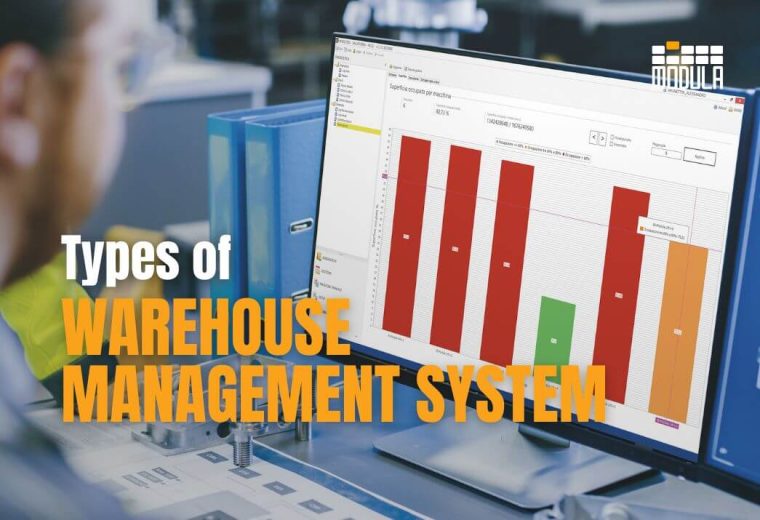
Inventory software works best when it integrates seamlessly with existing systems like enterprise resource planning (ERP) platforms, warehouse management systems (WMS), and eCommerce tools. See the different types of warehouse management systems to understand which fits best with inventory optimization
Strong integrations help keep inventory data accurate across operations and reduce the risk of disconnected systems or manual errors.
Scalability
As businesses grow, inventory management tends to get a lot more complicated.
More orders, more SKUs, and more warehouse locations can quickly create operational bottlenecks if systems can’t keep up.
Choosing software that can grow alongside the business helps avoid unnecessary disruptions and costly system upgrades as operations expand.
How Modula Supports Inventory Optimization
The right inventory optimization solutions can make it easier to manage growing inventory demands and more complex warehouse operations.
As warehouses become busier, order volumes increase, and inventory spreads across multiple systems and locations, managing inventory efficiently becomes much more challenging.
That’s why many businesses invest in warehouse software and automated storage solutions that can improve inventory visibility, reduce manual processes, and support long-term growth.
With Modula, businesses can connect warehouse management software, automated storage, and operational data to improve inventory control and keep warehouse operations running more smoothly.
Modula Warehouse Management System
Modula WMS supports inventory optimization by helping businesses manage inventory locations, item data, warehouse transactions, and material movements from a centralized platform.
The software communicates with Modula automated storage systems and can also integrate with ERP or other host systems to exchange essential data, such as item databases, order lists, and performance statistics.
To support different warehouse needs, Modula offers two warehouse management solutions:
- Modula WMS Base: Designed for smaller warehouses or businesses looking for a scalable starting point
- Modula WMS Premium: A more advanced solution for businesses that need additional warehouse management, inventory control, traceability, and ERP integration capabilities.
Both platforms help businesses:
- Get a clearer view of where inventory is stored and how it is moving across the warehouse
- Improve picking and replenishment accuracy to reduce costly errors
- Cut down on manual tasks and time-consuming paperwork
For businesses exploring inventory optimization services, having a system that improves both visibility and workflow accuracy can make everyday inventory management easier to handle.
Get more control over your inventory.
Modula Automated Storage Solutions
Inventory optimization is not only about software. It also depends on how inventory is physically stored, accessed, and replenished.
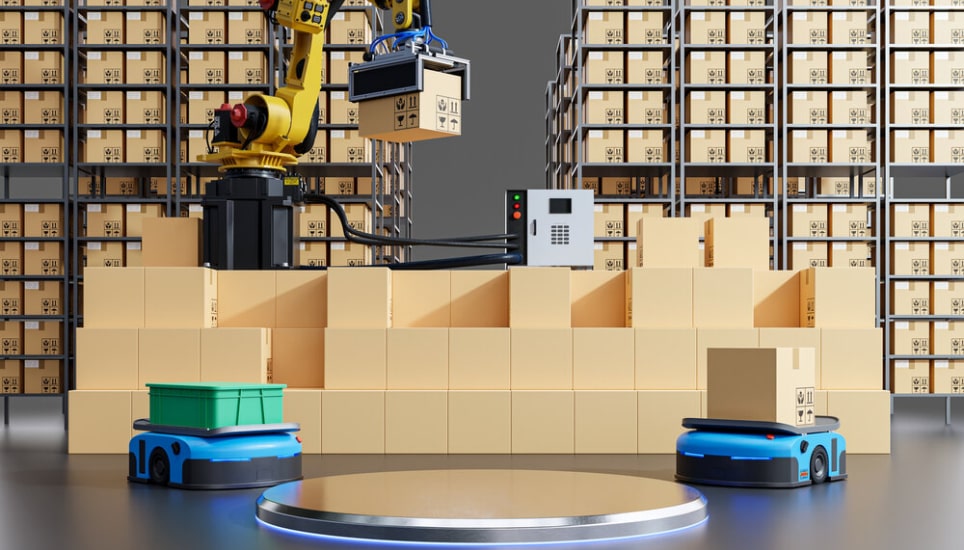
Modula automated storage solutions help businesses use vertical space more efficiently, reduce time spent searching for items, and bring products directly to the operator through goods-to-person workflows.
By combining automated storage with Modula WMS, businesses can improve inventory accuracy, reduce picking errors, and make better use of available warehouse space.
This is especially useful for operations that manage many SKUs, limited floor space, high picking volumes, or inventory that needs to be tracked more carefully.
Modula IoT
Modula IoT supports more connected warehouse operations by giving businesses greater visibility into system activity, performance, and operational data.
Available with Modula WMS Premium it includes two core tools:
- Modula Web Analytics: A remote monitoring and analytics platform that provides real-time insights into warehouse performance, system activity, machine status, and operational trends.
- OPC-UA Telemetry: A standardized data integration tool that allows Modula systems to share operational data securely with third-party platforms and plant systems.
Together, these tools help businesses monitor warehouse activity more closely, respond faster to operational issues, and make better decisions using live warehouse data.
Keep your warehouse connected, visible, and running efficiently.
Types of Warehouse Management Systems: Key Takeaways
- Better inventory planning leads to smoother operations: Effective supply chain inventory optimization helps businesses keep the right products in stock without overloading warehouses with excess inventory.
- The right tools make inventory management easier to handle: Advanced inventory optimization tools give businesses a clearer view of inventory movement, warehouse activity, and SKU performance in real time. Investing in smarter inventory management optimization can help reduce manual work, improve picking accuracy, and support better everyday inventory decisions.
- Connected systems help businesses scale more seamlessly: As warehouses grow and operations become more complex, businesses need strong inventory optimization strategies to stay organized across multiple locations and sales channels.
Inventory Optimization: FAQs
What is inventory optimization?
Inventory optimization is the process of keeping the right amount of stock on hand to meet customer demand without overspending on storage or logistics.
The goal is to avoid common inventory problems like running out of products, overstocking items that don’t move, or dealing with delayed orders caused by backorders.
What are the best practices for supply chain inventory optimization?
Strong inventory optimization practices help businesses stay on top of inventory levels, avoid stock imbalances, and keep products moving smoothly across the supply chain.
Some noteworthy inventory optimization best practices include:
– Improving inventory visibility across warehouse locations
– Using demand forecasting to better predict inventory needs
– Setting safety stock levels to prepare for supply chain disruptions
– Automating inventory tracking and replenishment processes
– Regularly reviewing SKU performance to identify slow-moving products
– Leveraging inventory optimization software to support real-time decision-making
– Monitoring inventory data closely to reduce stockouts and excess inventory
How do inventory optimization tools help improve warehouse operations?
Inventory optimization tools help businesses keep a closer eye on inventory levels, product movement, and overall warehouse activity.
With features like real-time inventory tracking, demand forecasting, and automated inventory replenishment, it becomes easier to avoid stock issues and keep orders moving smoothly.
These tools also help reduce manual work, improve inventory accuracy, and give businesses better visibility across the warehouse, making day-to-day inventory management much easier to handle.
What should businesses look for in inventory optimization software?
Businesses should look for inventory optimization software that supports real-time visibility, reporting, demand forecasting, replenishment planning, system integration, and scalability.
For warehouse operations, it is also important to choose software that can connect with existing systems, such as ERP platforms, warehouse management systems, and automation technologies.