Turnaround Time in Logistics: Benefits, Formula & Strategies
Decreasing turnaround time (TAT) in logistics is essential for maintaining efficient operations and meeting growing customer expectations.
In warehouse logistics, TAT measures the time from when a fulfillment order is submitted to when it is fully completed.
As demand for faster service continues to rise, retail giants like Amazon are raising the bar with new one-hour and three-hour delivery options.
If improving turnaround time is a priority for your team, this guide will help you:
- Discover why turnaround time is a key driver of logistics performance
- Learn how to calculate turnaround time (TAT)
- Explore how Modula’s advanced warehouse solutions can help accelerate your operations
Why Turnaround Time Plays a Key Role in Logistics
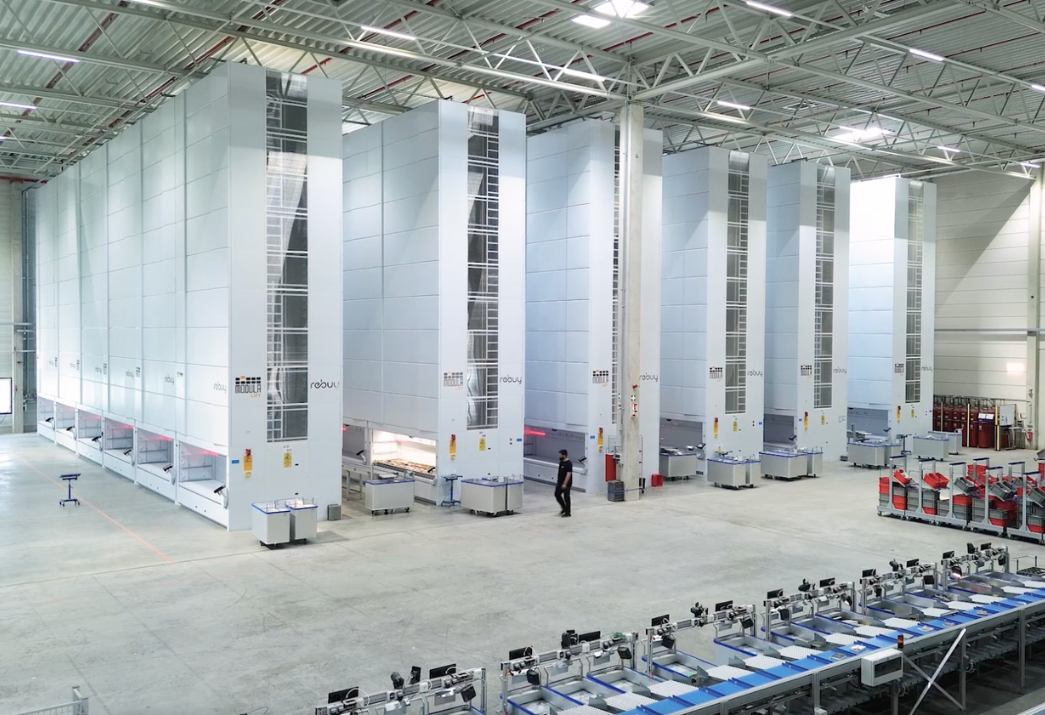
Turnaround time (TAT) is often the difference between a warehouse that simply functions and one that performs at a high level.
It reflects how efficient operations move at every stage, from inbound handling to outbound shipping.
As turnaround time gets faster, operations feel less congested, delays become less frequent, and teams can move more goods without added strain.
Impact on Customer Satisfaction and Reliability
Shorter turnaround times directly influence how customers experience your service. Faster processing and delivery lead to more reliable timelines, fewer delays, and stronger service consistency.
Meeting delivery expectations goes beyond simply hitting deadlines; it shows customers they can count on you.
That reliability matters more than ever, especially when a recent study found that 65% of consumers will stop shopping with a retailer after just two to three late deliveries.
Over time, consistently delivering as promised builds trust, strengthens your reputation, and encourages repeat business.
Cost Reduction and Operational Savings
Improving TAT in logistics does more than speed up processes; it also creates real opportunities to cut costs.
When processes run more efficiently, you:
-

Decrease labor hours per order
-
Recover floor space by preventing inventory stagnation.
-

Lower inventory carrying costs through faster throughput.
-
Eliminate reverse logistics costs
For instance, faster unloading and processing free up dock space and equipment sooner, making it easier to keep operations moving without delays.
Over time, these small gains add up, helping you lower costs while still maintaining productivity.
Competitive Advantage and Continuous Improvement
A refined TAT allows companies to handle higher volumes without disrupting operations.
Keeping an eye on TAT makes it easier to spot patterns, identify bottlenecks, and implement targeted improvements.
Once those gaps are clear, businesses can make:
- Targeted improvements
- Reduce disruptions
- Keep operations running consistently
How To Calculate Turnaround Time (TAT)
Turnaround time (TAT) is simply the total time it takes to complete a certain warehouse process.
Understanding how to calculate TAT helps businesses pinpoint where delays build and where processes can be refined.
Formula Example
TAT = Completion Time – Start Time
Example: If your team receives goods at 8:00 AM and they are fully stocked by 10:30 AM, your TAT for receiving is 2.5 hours.
Breaking Down the Formula
- Start Time: When the process begins, such as when a truck arrives or goods are received
- Completion Time: When the process is finished, such as when the truck departs or the task is completed
- Elapsed Time: The total time taken between these two points

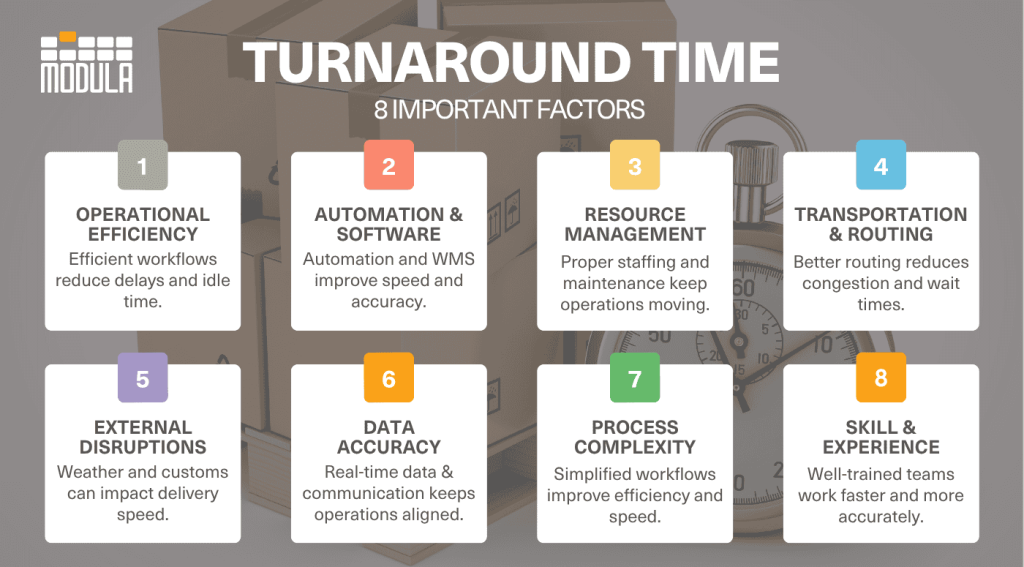
8 Factors Affecting Turnaround Time in Logistics
TAT in logistics rarely depends on just one factor; it’s the result of how well operations, systems and external variables work together.
Identifying these friction points is the first step toward reclaiming lost time and optimizing your warehouse throughput.
Operational and Process Efficiency
Turnaround time often starts to slip at the operational level.
When inbound schedules, dock availability, and labor planning aren’t aligned, delays build quickly and idle time increases.
Keeping receiving, loading, and unloading processes in sync helps maintain a steady flow of goods without unnecessary stops or backtracking.
Automation and Software
Beyond coordination, the systems you rely on play a major role.
Warehouses leveraging advanced WMS platforms, AI-driven planning, and automated handling systems can move inventory faster and with greater accuracy. Learn more about how a WMS works.
On the other hand, manual processes and outdated tools tend to introduce friction, slowing down throughput, and limiting scalability.
Resource Availability and Management
Even with the right innovations in place, warehouse operations can stall without adequate resources.
This is especially true as workforce shortages continue to be a top concern for U.S. supply chain leaders, putting added pressure on day-to-day operations.
Labor gaps, unexpected warehouse equipment downtime, or inefficient task allocation can quickly disrupt flow.
Maintaining proper staffing levels and staying ahead of maintenance needs helps keep processes running as planned.
Transportation and Route Planning
TAT doesn’t end at the warehouse. What happens in transit can either keep operations moving or introduce delays.
Poor route planning increases travel time and fuel costs, while inefficient scheduling can create congestion at loading docks and extend wait times.
In high-volume environments such as ports, turnaround speed depends heavily on berth availability, meaning whether ships can dock immediately, and container handling capacity.
External Disruptions and Regulatory Environment
Some delays are simply outside of operational control.
Weather conditions, traffic congestion, and complex customs procedures can slow movement, especially in international logistics.
Building flexibility into schedules and planning for these variables can help reduce their overall impact.
Communication and Data Accuracy
Underlying all these factors is the flow of information. When communication breaks down or data is inaccurate, even well-planned operations can fall out of sync.
Clear communication and reliable, real-time data make it easier to:
- Coordinate activities
- Avoid delays
- Keep turnaround time consistent across the supply chain
Process Complexity
When processes aren’t streamlined, small inefficiencies begin to stack up. Additional steps and repeated validations might seem minor, but they can significantly slow turnaround over time.
Optimizing processes means identifying where time is lost and removing non-essential steps.
Standardized workflows create a more consistent and efficient flow, while tools like barcode scanning and system-guided tasks reduce manual work and improve accuracy.
The result is faster, more reliable turnaround performance.
Skill and Experience
Behind every process is a team that directly impacts how quickly work gets done.
Inexperience can lead to delays and errors, while seasoned workers move with confidence, resolve issues faster and keep workflows on track.
Ongoing training and development help build this consistency, enabling teams to perform at a higher level and maintain faster, more dependable turnaround times.
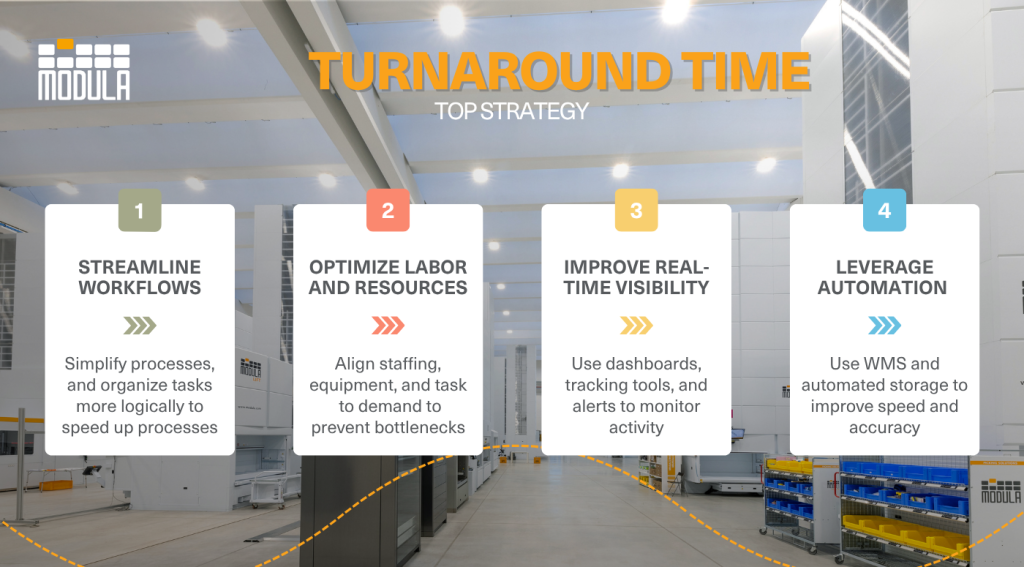
Top Strategies To Improve Turnaround Time in Warehousing
Enhancing turnaround time in warehousing comes down to a set of focused strategies that streamline workflows, reduce delays, and keep operations moving efficiently.
Streamline Warehouse Workflows
Improving turnaround time often starts with taking a closer look at how work moves through the warehouse. When processes are overly complicated or out of sequence, delays tend to build up.
By simplifying workflows, reducing unnecessary steps and organizing tasks more logically, operations become easier to manage and faster to execute.
Even targeted changes can have a measurable impact.
Optimizing pick paths to reduce travel time, repositioning fast-moving SKUs closer to packing areas or reorganizing storage zones based on demand patterns can significantly improve speed and consistency.
Optimize Labor and Resource Allocation
Even the best processes can slow down if resources aren’t aligned. When staffing levels, equipment availability, or task assignments don’t match demand, bottlenecks are hard to avoid.
Keeping workloads balanced, planning for peak periods, and maintaining equipment regularly helps prevent disruptions.
With the right resources in place, teams can keep operations steady and responsive.
Improve Visibility and Real-Time Coordination
Turnaround time improves when everyone is working with the same, up-to-date information. When teams can see what’s happening in real time, they can respond quickly and keep things moving.
Dashboards, tracking tools, and alerts make it easier to spot delays early and adjust as needed.
This level of visibility helps teams stay aligned, avoid unnecessary slowdowns, and maintain a more consistent flow of operations.
Leverage Automation and Technology
The right tools can take a lot of pressure off day-to-day operations.
Systems like WMS platforms, barcode scanning, and automated storage solutions help reduce manual work and keep tasks moving consistently.
With the right warehouse systems in place, teams no longer have to rely on assumptions; they can follow structured workflows that improve both speed and accuracy.
Over time, this leads to fewer errors, seamless workflows, and faster turnaround across the board. This is where integrated solutions make a noticeable difference.
Solutions like Modula’s automated vertical lift modules (VLMs), combined with Modula WMS, help warehouses move beyond manual, labor-intensive workflows.
By bringing items directly to the operator and using WMS-driven task management with barcode integration, you can:
- Improve accuracy: Eliminate picking errors that lead to costly returns.
- Minimize unnecessary movement: Reclaim the 70% of time typically wasted on walking.
- Ensure processes are aligned: Connect your warehouse floor directly to your ERP for seamless data flow.
The result is a more connected operation that supports faster, more consistent turnaround times.
Turnaround Time in Logistics: Key Takeaways
- Turnaround time meaning: Turnaround time (TAT) in logistics is the total time it takes to complete a specific warehouse process, from when it begins to when it is fully completed.
- TAT inclusions: It covers the entire flow of operations, including essential supply chain steps like receiving goods, processing them in the warehouse, and unloading trucks
- How to calculate turnaround time in logistics: To calculate TAT in logistics, subtract the start time of a process from its completion time

Turnaround Time in Logistics: FAQs
What is turnaround time?
In logistics, the turnaround time meaning is the total time it takes to complete a specific process, from start to finish, such as offloading, processing, and reloading a truck.
What does delivery turnaround time mean?
Delivery TAT is the time between when an order is placed and when it reaches the customer, including processing, packing and shipping.
How to you calculate turnaround time?
Turnaround time (TAT) is simply the difference between when a task starts and when it is completed. It shows the total time taken to finish a process from beginning to end.
What is turnaround time in shipping?
In shipping, turnaround time refers to how long it takes for a vessel to complete its full cycle, from arriving at a port to departing again for its next journey.
This includes everything that happens while the ship is docked, such as unloading cargo, loading new shipments, and carrying out necessary operational checks.
Once these activities are completed and the vessel is ready to sail, the turnaround cycle is complete.
A shorter TAT means the ship spends less time in port and more time moving goods, which is critical for maintaining efficient and cost-effective maritime operations.
Does turnaround time include shipping?
No, turnaround time (TAT) typically does not include shipping time.
It refers only to the production phase, the time needed to prepare, produce, print, and package an order before it is handed over to the courier.
Shipping time is separate and covers the delivery period to your location.