A 101 Guide to B2B Fulfillment: Best Practices & FAQs
B2B fulfillment underpins the massive supply chain operations between manufacturers, wholesalers, and retailers, where accuracy, scale, and consistency often outweigh speed.
For warehouse managers, this means managing complex logistics: larger orders, stricter compliance, and partner-specific delivery requirements.
But it’s not just about moving product; it’s about delivering a reliable, frictionless experience. As customer expectations rise, fulfillment teams face mounting pressure to get it right.
In fact, a report found that 65% of B2B organizations see customer experience as a top priority.
By the end of this guide, you will:
- Understand the key differences between B2B and B2C fulfillment
- Discover best practices for managing inventory, recurring orders, and compliance
- Explore how warehouse automation tools like Modula WMS can streamline bulk order processing, improve compliance, and ensure accurate, on-time delivery at scale

Understanding B2B Fulfillment
B2B fulfillment (Business-to-Business) is the process of shipping products to other businesses, whether that’s big-box retailers, department stores or smaller boutiques, rather than directly to consumers.
These orders are generally fulfilled in bulk and shipped via freight. However, smaller B2B orders can be sent through standard parcel carriers.
The goal is to help businesses stock their shelves and prepare for resale, whether through brick-and-mortar stores, eCommerce platforms, or other channels such as:
- Third-party marketplaces
- Subscription boxes
- Wholesale distribution networks
A B2B fulfillment center plays a critical role acting as a centralized hub to manage inbound freight, inventory storage, outbound shipments, and documentation.
How B2B Fulfillment Services Differ From B2C: Key Differences
When it comes to order fulfillment, B2B and B2C operations follow very different models tailored to their unique customer needs.
Understanding these distinctions is essential for companies aiming to optimize logistics, scale operations, and improve customer satisfaction.
| Category | B2B Fulfillment | B2C Fulfillment |
|---|---|---|
| Order volume | Bulk quantities, fewer total orders. Large shipments replenished periodically. | Small quantities, high volume of individual orders shipped daily. |
| Shipping method | Typically shipped via freight and palletized, though smaller orders might be sent by parcel if properly boxed | Typically shipped viaParcel carriers, individual boxes/polybags to residential addresses |
| Regulations | Strict compliance (EDI, Hazmat, Routing Guides). Non-compliance leads to chargebacks. | Fewer compliance requirements |
| Cost | Higher due to size, labor, and specialized handling equipment | Lower, with minimal handling and faster turnaround |
| Fulfillment speed | Time-sensitive. Guaranteed delivery dates are key for inventory planning. | Fast shipping matters, but urgency is driven by customer expectations |
| Customer relationship | Long-term contracts with negotiated terms and dedicated account management | Transactional, with less direct contact |
| Returns | Fewer returns, but complex; might involve RMAs or pallet-level restocking | Frequent returns; requires fast, simple return processing |
| Technology | Integrates with ERPs, EDI systems, and supply chain software | Runs on eCommerce platforms and API-based tools for quick fulfillment |
| Packaging | Bulk or industrial packaging, often customized by retailer or distributor needs | Branded, consumer-friendly packaging optimized for individual shipping |
| Payment terms | Invoicing, credit terms, and purchase orders | Immediate payment via credit card, PayPal, or digital wallets |
How Does B2B Fulfillment Work?
B2B order fulfillment goes beyond shipping bulk orders. It’s a strategic logistics operation designed to:
- Uphold supply chain reliability
- Meet complex compliance standards
- Support long-term business partnerships
It demands precise inventory management, scheduled delivery windows, and adherence to regulations that vary by product, region, and retailer.
Modern B2B fulfillment and distribution operations often rely on integrated systems that can support high-volume shipments while maintaining visibility and control.
Order Initiation via Contract or Portal
Business clients place orders through EDI (Electronic Data Interchange) systems, procurement portals, or directly with account reps.
These are often based on long-term contracts with pre-negotiated pricing and volume commitments.
Inventory Allocation and Prep
Inventory is pulled from bulk storage zones or reserved stock.
Orders might require specific “value-added services” like kitting, custom labeling, or packaging to meet the receiving company’s specific compliance rules or retail display standards.
Compliance and Documentation
B2B order fulfillment requires extensive paperwork, such as Bills of Lading (BOL), packing slips, and export forms. For regulated goods, such as electronics, chemicals, or pharmaceuticals, Material Safety Data Sheets (MSDS) are mandatory.
Missing or incorrect paperwork can delay delivery and lead to costly penalties.
An analysis found that chemicals and petrochemicals made up 35% of the U.S. hazardous goods logistics market, with non-compliance driving major investment in tracking and documentation systems.
Consolidated Packing and Freight Prep
Orders are typically packed in bulk, palletized, and prepared for LTL or FTL freight. Shrink-wrap, corner protectors, and barcode labeling are often used to maintain product integrity through transit.
Freight Scheduling and Delivery Coordination
Most B2B orders are not drop-off deliveries because they require coordination with loading docks, appointment windows, and receiving protocols.
Deliveries must arrive on time to avoid disrupting the buyer’s supply chain.
Receiving and Inspection
Once delivered, the client inspects the shipment against packing slips and purchase orders. Errors here can lead to chargebacks or strained partnerships, making accuracy a top priority.
Invoicing and Payment Terms
Invoices are issued post-delivery, with terms ranging from Net 15 to Net 60.
Efficient fulfillment not only preserves the business relationship but ensures faster payment cycles and lower days sales outstanding (DSO).

How 3PL B2B Fulfillment Works: What To Expect From a Third-Party Logistics Partner
3PL B2B fulfillment means outsourcing order processing to a third-party logistics provider that can manage inventory, freight, and returns at scale.
As more companies rely on 3PLs, choosing the right B2B fulfillment company becomes a competitive advantage.
The demand for this model is rising fast. An industry report found that the global third-party logistics market was valued at over $1 trillion in 2023, with projections pushing it to nearly $1.9 trillion by 2030.
As more companies turn to 3PLs to scale and streamline B2B operations, reliable fulfillment has become a strategic advantage.
So, what can you expect when working with a 3PL for B2B order fulfillment?
- Freight and pallet-based shipping instead of small-parcel delivery
- EDI and systems integration for seamless data exchange
- Custom labeling and documentation to meet B2B compliance standards
- Scalable capacity to handle seasonal or contract-based demand
To stand out in a crowded market, some 3PLs are now investing in B2B fulfillment centers with real-time visibility, giving clients live updates on order status, inventory levels, and performance metrics.
Best Practices for B2B Fulfillment Integration
Integrating B2B fulfillment into your warehouse operations takes more than just automation. It also takes accuracy, connectivity, and processes that can scale.
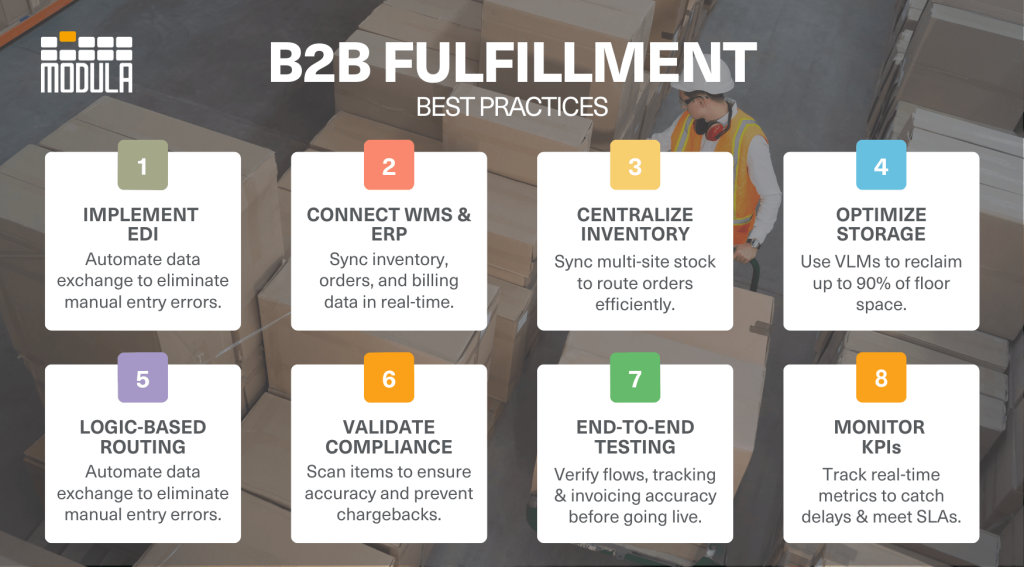
To achieve the fastest order fulfillment for B2B retailers, here’s what it takes to get B2B order fulfillment integration right:
Implement EDI for Standardized Data Exchange
Electronic Data Interchange (EDI) is the standard language of B2B. Ensure your fulfillment system supports EDI formats (for example, 850 for purchase orders and 856 for advance ship notices) to automate communications with distributors, retailers, and suppliers.
Modula’s WMS can be configured to integrate with EDI platforms to reduce manual entry and improve order accuracy.
Connect your WMS to Your ERP and CRM
Integrate the WMS with your existing ERP system to keep inventory, order status, and billing data in sync in real time.
Adding your CRM into the mix gives sales teams full visibility into fulfillment activity, making it easier to adjust forecasts and service levels on the fly.
Centralize Inventory Syncing Across Locations
If you operate multiple warehouses or distribution centers, it’s critical to keep your inventory data synced in real time across all locations.
The Opportunity: A study found that 36% of warehouse operations remain mostly manual, and just 10% are fully or semi-automated.
The Fix: Use a WMS to sync inventory data across all nodes in real-time. This allows you to route orders intelligently based on proximity to the customer, drastically reducing shipping costs and preventing “double-selling” of stock.
Optimize for High-Density Storage
B2B orders are bulky. Storing pallets and large cases on static shelving wastes massive amounts of floor space.
- Best Practice: Implement high-density storage solutions, like Vertical Lift Modules (VLMs), to store cases and pallets vertically. This can recover up to 90% of your floor space, allowing you to hold more inventory without expanding your footprint.
Set Logic-Based Order Routing
Use your WMS to create intelligent workflows that direct different types of orders to the most efficient processing zone.
- Bulk Routing: Send full-pallet orders directly to a forklift zone or a dedicated pallet shuttle system.
- Split-Case Routing: Send smaller, “less-than-case” picks to an automated zone (like a VLM) for faster, more accurate picking.
- Assign orders to the best-suited warehouse or fulfillment center based on proximity to the customer’s dock, current load balancing, or shipping cut-off times
Validate Compliance During Pick and Pack
Don’t wait until the shipping dock to check for errors. Use barcode scanning and system-directed picking to validate every item as it is picked.
This ensures that the right SKU, lot number, and quantity are packed, drastically reducing the risk of retailer chargebacks.
Conduct End-to-End Testing With Partners
Before going live, run test orders between your WMS, ERP, freight carriers, and customer portals.
Confirm that:
- Order data flows accurately
- Shipment tracking updates in real time
- Invoices reflect correct terms and line items
Monitor KPIs and Exceptions Instantaneously
B2B contracts often have strict Service Level Agreements (SLAs). You must monitor metrics like Order Cycle Time and On-Time In Full (OTIF) rates continuously.
Catching an exception (like an out-of-stock item) early allows you to notify the client proactively, preserving the relationship.
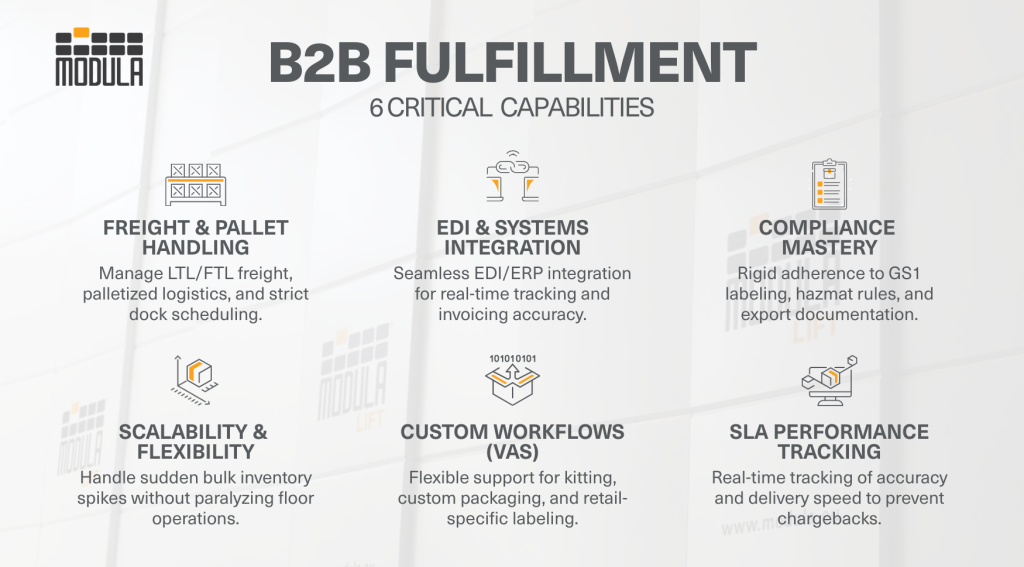
6 Critical Capabilities for a Successful B2B Operation
Whether you manage fulfillment in-house or act as a 3PL for others, your operation must master these six areas to handle the complexity of B2B.
These are the essentials you don’t want to overlook:
standards with continuous temperature monitoring, RFID-secured access and automated audit-ready reporting.
Freight and Pallet Handling
Since B2B orders are rarely small-parcel, your facility must be equipped for freight coordination. This includes managing Less-Than-Truckload (LTL) and Full Truckload (FTL) shipments, organizing palletized logistics, and handling strict dock scheduling protocols.
EDI and Systems Integration
Your infrastructure must support EDI, ERP, and WMS integrations to ensure real-time order tracking, invoicing, and data accuracy across platforms.
Compliance Capabilities
From GS1 labeling and hazmat documentation to international export forms, you must have rigid processes in place to meet industry-specific compliance standards. Failing here leads to immediate penalties.
Scalability and Volume Flexibility
B2B demand fluctuates wildly based on seasons or new retail contracts. Your storage system needs to be scalable and capable of handling a sudden influx of bulk inventory without paralyzing your floor space.
Custom Order Workflows
B2B fulfillment often involves kitting, custom packaging, or retail-compliant labeling. Your picking process must be flexible enough to handle these special instructions efficiently.
SLA Performance and Reporting
You need clear visibility into your performance. Tracking metrics like fulfillment accuracy, on-time delivery, and exception rates is essential for avoiding chargebacks.
How Modula Automation Streamlines B2B Fulfillment
For High-Density Bulk Storage: Modula Pallet
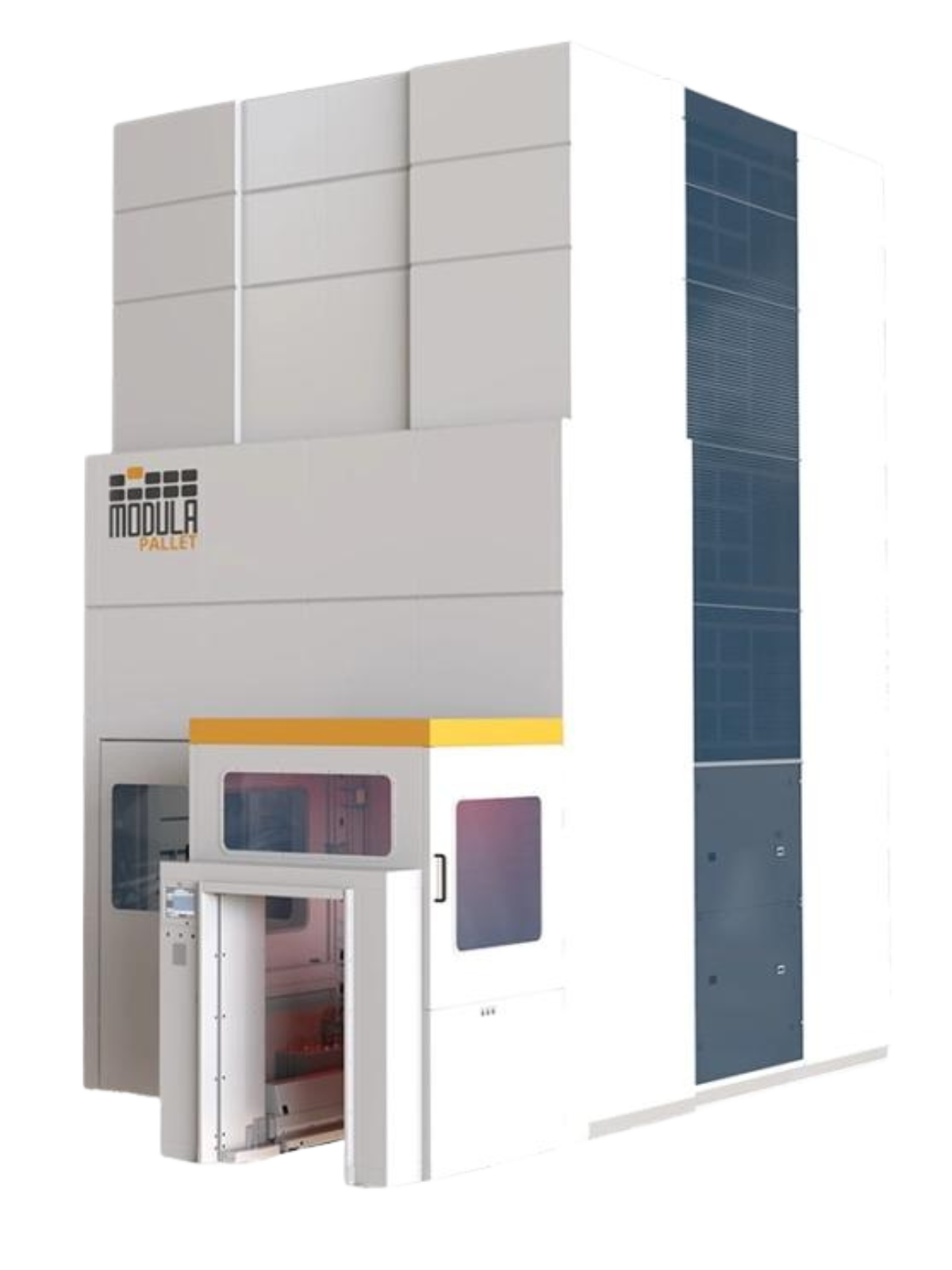
Standard VLMs are great for cases, but B2B runs on pallets. The Modula Pallet is designed to store and retrieve full 48″ x 40″ pallets automatically, eliminating forklifts in the aisles and improving safety.
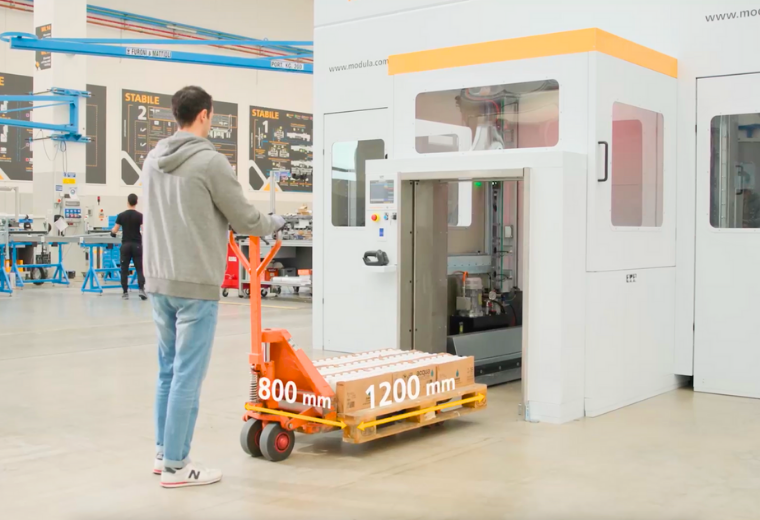
Free up floor space by storing pallets vertically.
For Compliance & Accuracy: Modula WMS
The Modula WMS acts as the digital backbone of your compliance strategy. It integrates seamlessly with ERPs and supports barcode scanning to validate every item during the pick.
- Diagnostics: Real-time diagnostics and customizable workflows catch issues, like GS1 labeling errors, hazmat tags, or missing export forms, before shipments leave the dock.
- Chargeback Prevention: By ensuring documentation accuracy, the system drastically reduces the risk of costly vendor chargebacks and shipping delays.
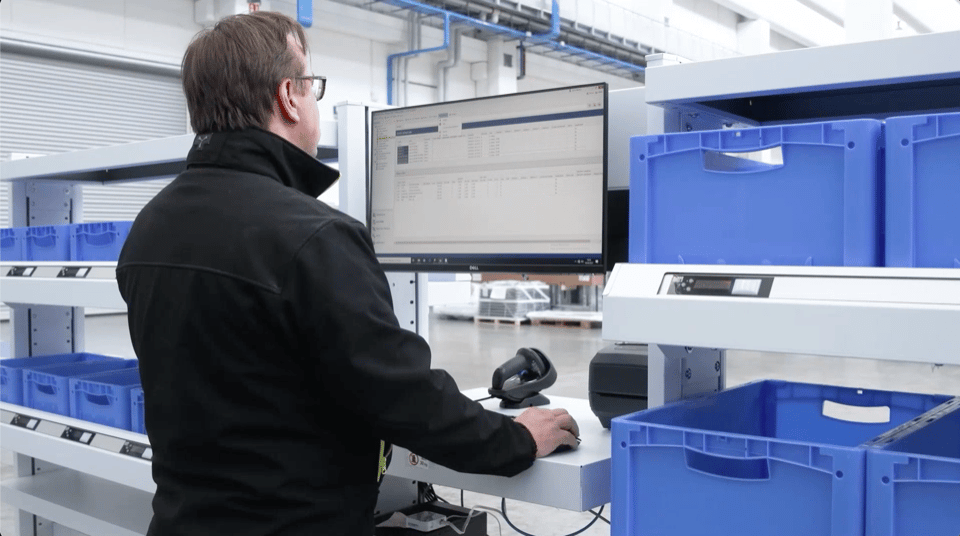
Take the hassle out of warehouse management.
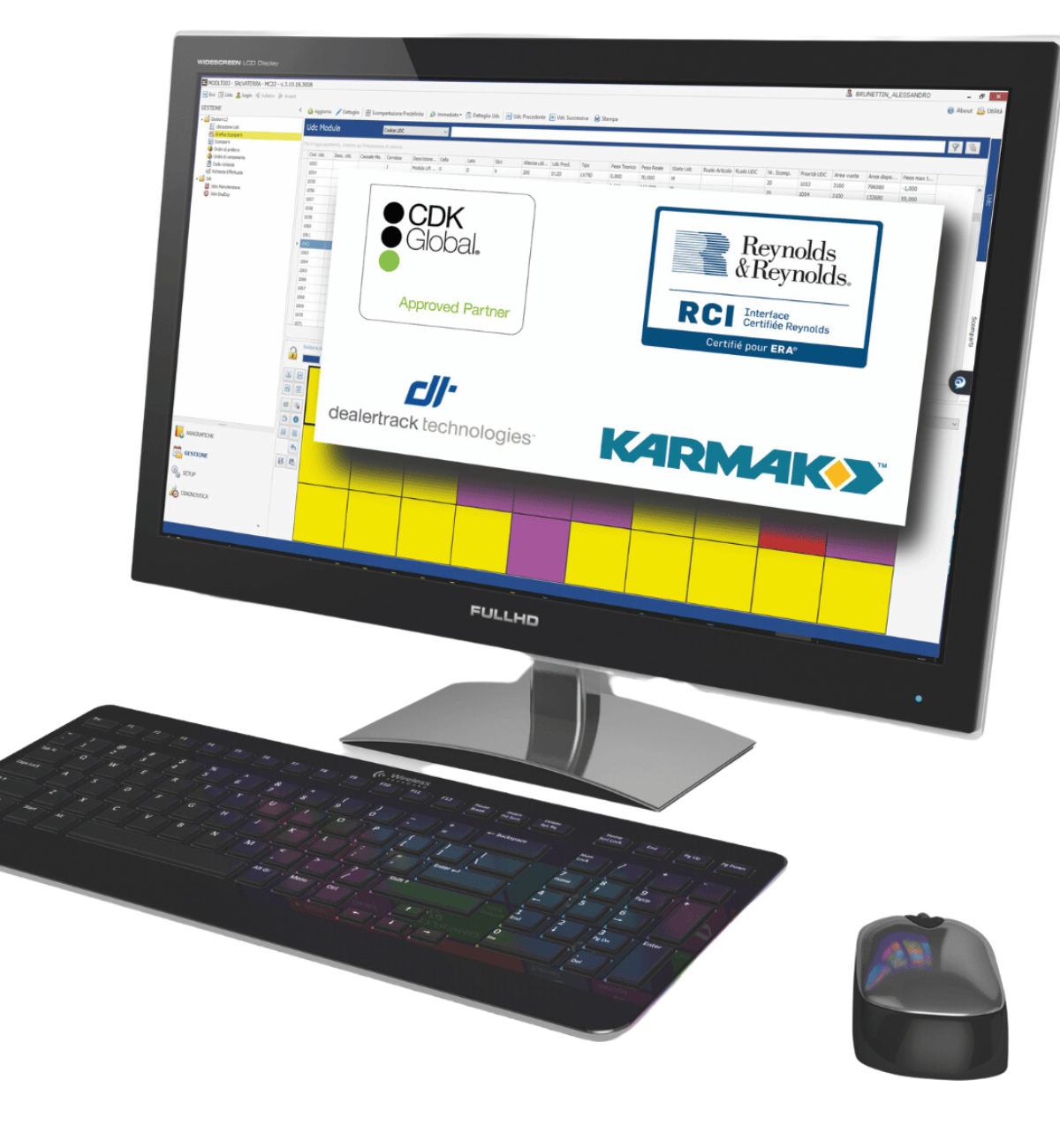
For Faster Order Processing: Modula Lift
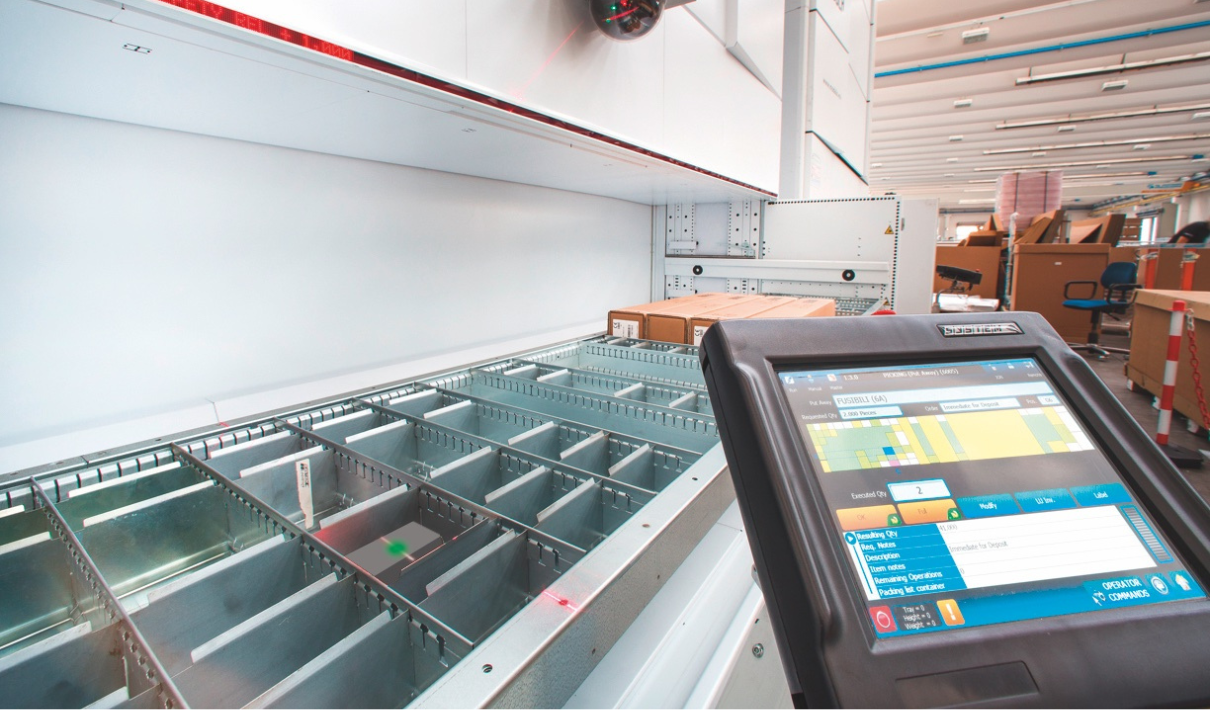
For B2B orders requiring “split-case” picking (building mixed pallets), the Modula Lift VLM is unmatched.
It presents trays to the picker, enabling high-speed order consolidation without walking miles through the warehouse.
Reclaim your floor space and use the ceiling height you already have.

For Remote Visibility & Control: Modula IoT
To meet strict B2B Service Level Agreements (SLAs), you need total visibility. Modula IoT is the remote management platform that connects your automated units to the digital world.
It powers advanced tools like Modula Web Analytics, providing customizable dashboards and real-time monitoring down to the specific tray level.
- Real-Time Metrics: Track key fulfillment metrics like order speed, error rates, and machine performance instantly to ensure you are meeting your SLA targets.
- Exception Alerts: Built-in alerts notify you immediately of exceptions, such as out-of-stock items, labeling issues, or potential delays, allowing you to resolve problems early and keep your B2B commitments on track.
B2B Fulfillment Explained: Key Takeaways
- Priorities Shift: Unlike B2C, B2B fulfillment prioritizes bulk volume, strict compliance, and scheduled delivery windows over pure shipping speed.
- Compliance is Critical: Success depends on managing complex regulations, such as retailer “Routing Guides,” hazardous material documentation, and strict labeling standards to avoid vendor chargebacks.
- Integration is Non-Negotiable: To prevent errors, your WMS must sync inventory data in real-time across all locations and integrate seamlessly with ERP and EDI systems.
- Performance Monitoring: Meeting strict Service Level Agreements (SLAs) requires real-time tracking of KPIs like On-Time In Full (OTIF) rates. Catching exceptions early is the only way to preserve long-term business partnerships.
- Space Efficiency: High-density automation (like Modula VLMs) is the most effective strategy to manage the bulk inventory required for B2B without running out of valuable warehouse floor space.

Top FAQs About B2B Fulfillment
What is B2B fulfillment?
B2B order fulfillment is the process of preparing and delivering bulk orders between businesses.
It typically involves freight shipping, palletized handling, and strict regulatory compliance, supporting wholesalers, retailers, and distributors in stocking products for resale or internal use.
What is B2B fulfillment and how is it different from B2C?
B2B order fulfillment manages large, recurring orders between businesses, like manufacturers shipping palletized goods to retailers.
It often involves freight shipping, EDI integration, and strict compliance requirements.
In contrast, B2C order fulfillment handles smaller; individual orders delivered directly to consumers, with faster turnaround and simpler packaging.
How to manage inventory for B2B fulfillment?
Effective inventory management for B2B order fulfillment starts with real-time visibility across storage locations.
Using a WMS like Modula WMS, businesses can:
- Track inventory levels
- Assign SKUs to specific zones
- >Automate replenishment based on order frequency
Forecasting demand, allocating safety stock, and syncing systems with ERP and EDI platforms are also key to preventing stockouts and meeting SLA commitments.
What are the B2B fulfillment strategies for recurring orders?
Recurring B2B orders can benefit from automation and scheduling. Best practices include:
- Setting up standing purchase orders through EDI or customer portals
- Using a WMS to create pick-and-pack templates for repeat SKUs
- Allocating inventory zones for contract clients
- Leveraging Modula’s VLMs or automated systems for faster, repeatable workflows
- Using performance data to fine-tune delivery windows, staffing, and stock levels
These strategies help reduce manual work, improve accuracy, and strengthen B2B relationships through consistent service.