International Logistics: Benefits, Challenges & Best Practices
As global trade expands, retail brands are mastering international logistics to stay competitive.
By managing it effectively, they unlock new markets, grow their customer base, and boost revenue. In fact, 38% of all global eCommerce transactions are expected to be cross-border by 2028.
However, International logistics and transportation are inherently complex. Geopolitical risks, evolving regulations, and supply chain disruptions can all lead to costly delays.
That’s where an effective strategy comes in, combining expert services, real-time international logistics tracking, and automated warehouse infrastructure to navigate compliance and ensure speed.
In this guide, we will:
- Break down what international logistics entails and how it supports efficient product delivery worldwide
- Provide a detailed walkthrough of the core processes
- Highlight the differences between international and domestic logistics
- Show how a strong international logistics strategy ensures consistency, compliance, and cost-efficiency
- Identify the top global logistics challenges
- See how Modula’s automated solutions can help streamline global operations

Understanding International Logistics
International logistics involves the coordinated processes and systems that move finished goods across borders, from global shipping routes to regional distribution networks.
This ensures products are delivered efficiently to consumers worldwide.
International vs. Domestic Logistics
Looking to expand beyond domestic logistics? It’s important to understand how international shipping changes the game.
While domestic logistics offers predictable lead times, consistent infrastructure, and fewer regulatory hurdles, international logistics introduces additional challenges, such as customs clearance, tariffs, and complex documentation.
You’ll also face varying regulations, longer transit times, and geopolitical risks that can disrupt supply chain continuity.
| Aspect | International Logistics | Domestic Logistics |
|---|---|---|
| Borders and trade | Involves customs, tariffs, and trade barriers across countries | No border or trade barriers within the same country |
| Distance and transport | Covers longer distances using air, sea, rail, and road | Shorter distances, typically by truck or rail |
| Documentation | Requires detailed paperwork, such as declarations, invoices, and certificates | Minimal documentation; standard shipping labels |
| Regulations | Must comply with varying laws across countries | Governed by one set of national laws |
| Language and culture | Involves cross-cultural communication and foreign languages | Shared language and cultural norms |
| Risk management | Higher risk due to currency shifts, delays, and complex transit; often requires extra insurance | Lower risk, simpler insurance and fewer variables |
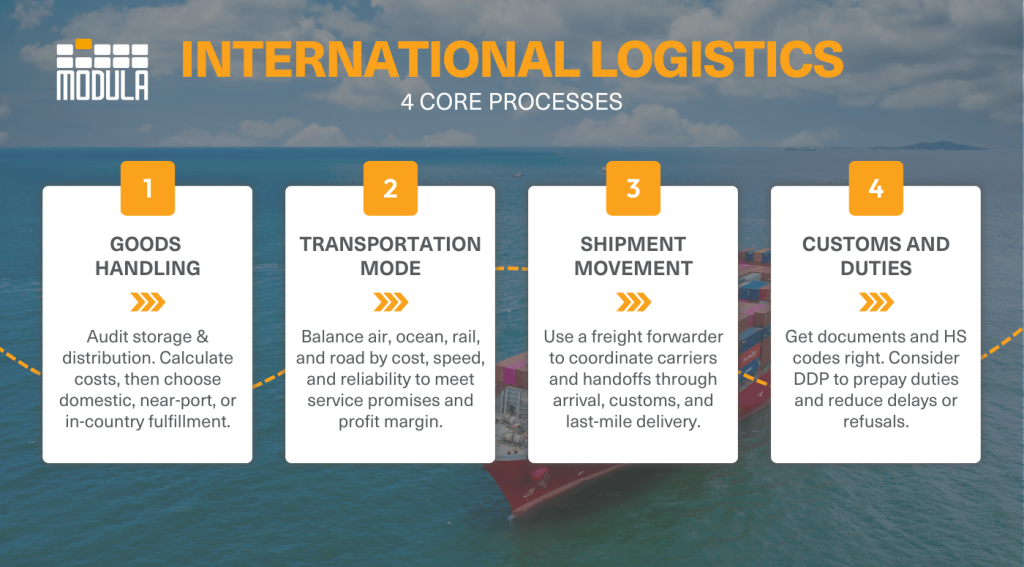
The 4 Core Processes of International Logistics
Step 1: Goods Handling
When expanding internationally, it’s important to assess how you currently store and distribute inventory.
For businesses shipping solely from a domestic warehouse, calculating landed costs is the first step. This includes:
- Duties
- Taxes
- Shipping fees
You can continue shipping internationally from your home base, but relocating or supplementing with a strategically placed warehouse near a port or border can cut costs and delivery times.
Alternatively, high order volumes from a specific country might justify storing inventory in a local fulfillment center, enabling domestic shipping and minimizing customs hurdles.
Step 2: Transportation Mode
Your choice of transportation depends on your budget, timelines, and reliability requirements. Most international deliveries involve a combination of these methods, especially in cross-border shipments.
To strike the right balance, weigh cost against delivery speed and consider how each mode aligns with your target customer’s expectations and your profit margins.
Step 3: Shipment Movement
Once your goods are ready to go, a freight forwarder steps in to manage the journey.
They handle transportation across trucks, planes, and ships, ensuring each handoff between carriers is seamless.
When the shipment reaches its destination country, customs clears it, and then it’s handed off to a last-mile carrier for delivery to the customer.
Step 4: Customs and Import Duties
This is the most critical bottleneck. International shipments have to clear customs and often come with import duties, which vary depending on the:
- Country
- Product value
- Classification codes (HS Codes)
It’s important to inform customers about these fees upfront, ideally before checkout.
If the paperwork isn’t accurate, contains the incorrect tariff code, or is missing product details, the shipment is likely to be delayed.
A customer who doesn’t anticipate paying duties at delivery may reject the package, which can ultimately leave you responsible for the expense.
To avoid that hassle, many companies choose Delivery Duty Paid (DDP) shipping. With DDP, the seller covers all duties and taxes upfront, creating a smoother experience for customers and reducing the risk of returns at the border.
Why International Logistics Is Essential for Global Business Success
So, why does international logistics matter for global business success? Here’s what it brings to the table.
Delivers a Consistent Customer Experience Across Borders
Efficient international logistics ensures that a customer in Berlin gets the same fast, accurate, and affordable delivery as one in Los Angeles.
This requires coordinated air freight, localized inventory, and reliable last-mile partners to meet 2–3 day global shipping expectations.
Without this consistency, customer satisfaction and loyalty can take a knock. And it’s not just theory: a logistics trends report found that 25% of companies globally actually lost customers due to supply chain, logistics, or fulfillment issues.
Ensures Compliance With International Trade Regulations
Each country enforces its own import/export laws, documentation, and labeling rules.
For instance, the EU requires CE markings on certain goods, while Brazil mandates electronic invoices (NF-e) before customs clearance.
A reliable international logistics process ensures compliance, avoids fines, and prevents costly border delays.
Lowers Fulfillment Costs and Operational Complexity
Optimized international logistics enables shipment consolidation, use of trade agreements like USMCA or the EU-Japan EPA, and duty savings through smart routing and bonded warehousing.
This cuts freight, customs, and handling costs, freeing resources for inventory or business growth.
4 Challenges in International Logistics
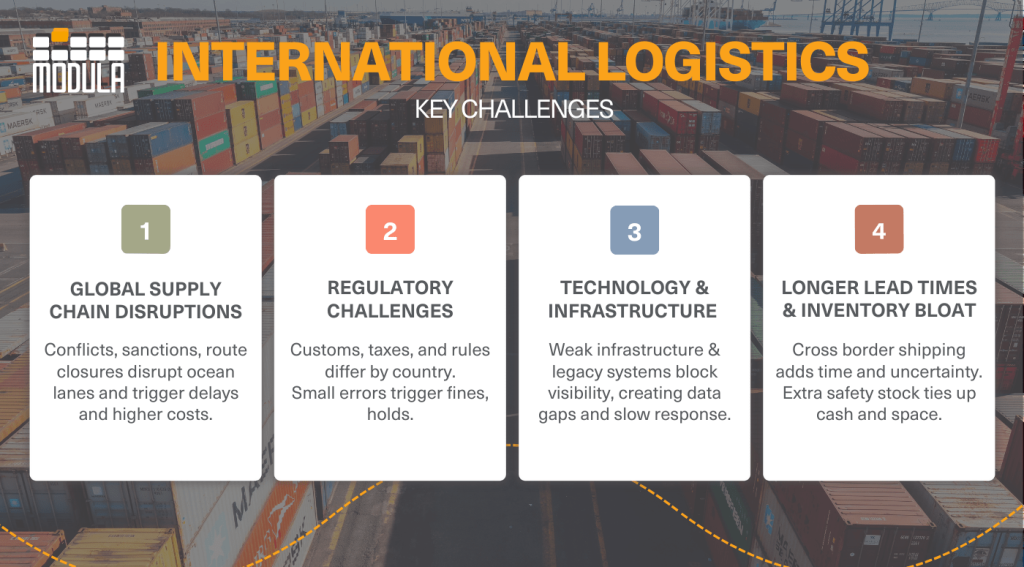
Before you expand globally, it’s worth knowing these four logistics challenges. These are the essentials you don’t want to overlook:
Global Supply Chain Disruptions
Global trade is highly sensitive to external shocks. A single point of failure can cascade across the entire network.
- Geopolitical Instability: Trade wars, sanctions, political unrest, and border conflicts all pose serious risks to global shipping routes. For example, attacks on vessels in the Red Sea led to a significant decline in traffic through the Suez Canal, a route that handles roughly 15% of global maritime trade.
- Unpredictable Events: Natural disasters, pandemics, and labor strikes at major ports can halt operations instantly. These disruptions force companies to hold more “safety stock” to weather the storm, leading to warehouse overcrowding.
Regulatory Challenges
Every country plays by its own rules when it comes to customs, taxes, and compliance. That means different paperwork, labeling standards, and product certifications depending on where you’re shipping to.
- The Risk: Keeping up with these changing requirements takes constant attention, and if something’s missed, it can lead to delays, fines, or even shipments getting stuck at the border. Keeping up with these changing requirements takes constant attention, and if something’s missed, it can lead to delays, fines, or even shipments getting stuck at the border.
Technology and Infrastructure Issues
Inconsistent infrastructure across countries, such as unreliable internet, limited access to warehousing, or outdated transportation networks, can hinder tracking, visibility, and coordination.
- The Tracking Challenge: When partners use different, unconnected systems, it becomes difficult to maintain real-time visibility. This “black hole” of data makes it impossible to manage customer expectations or react quickly to delays
Longer Lead Times and Inventory Bloat
International shipping is slower. To compensate for the risk of delays, companies often hold more “safety stock.” This leads to inventory bloat, filling up warehouses and tying up capital in goods that are just sitting on shelves.
5 Best Practices for Managing International Logistics and Tracking
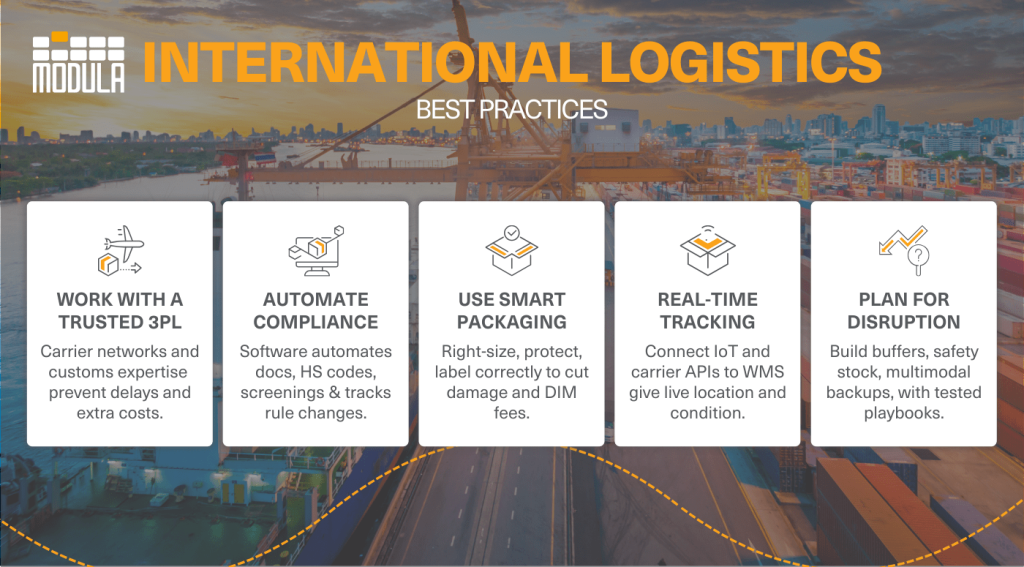
Managing cross-border logistics doesn’t have to be overwhelming. These five tips will help you stay on track.
Work With a Trusted 3PL Partner
Managing global logistics on your own is difficult. A reliable third-party logistics (3PL) provider brings expertise, established carrier networks, and deep knowledge of customs regulations.
They can help you simplify cross-border shipping and avoid unnecessary delays or costs.
Automate Trade Compliance
Regulations change from country to country and sometimes, month to month.
Every country enforces its own rules, from labeling standards to import taxes, and they change frequently. Mistakes like incorrect HS codes or undervalued shipments can lead to fines, delays, or customs holds.
To stay compliant, many companies use trade compliance software or partner with local consultants to automate documentation and track regulatory changes.
Addressing requirements upfront costs far less than the penalties and complications that come with noncompliance.
Leverage Smart, Durable Packaging
International shipping often involves long distances, multiple touchpoints, and a higher risk of damage.
Using sturdy, properly sized packaging helps:
- Protect your products
- Decrease dimensional weight charges
- Eradicates customs issues caused by poor labeling or improper documentation
This focus on packaging isn’t just a best practice, as it also reflects where the industry is headed.
An outlook report by The Association for Packaging and Processing Technologies shows strong demand for packaging and processing equipment, with the U.S. economy expected to keep growing throughout 2026, despite inflation and labor shortages.
Invest in Real-Time International Logistics Tracking
You cannot manage what you cannot see. Utilize technology like IoT sensors and integrated platforms to track shipments in real time.
- Visibility: Knowing exactly where a container is helps you proactively manage downstream operations, such as labor scheduling at the receiving warehouse.
- Condition Monitoring: For sensitive goods, tracking temperature and humidity during transit ensures product integrity.
Expect the Unexpected
Delays happen, whether it’s a typhoon disrupting operations in Southeast Asia or a labor strike at the Port of Los Angeles.
To stay ahead:
- Build in buffer time across your delivery windows
- Position safety stock near high-demand regions
- Use multi-modal shipping strategies that let you quickly pivot between air, sea, and ground when disruptions occur
How Automated Warehousing Supports International Logistics
When goods finally arrive from overseas, your local warehouse must be ready to process them efficiently. Modula’s automated solutions solve the specific inventory challenges created by international supply chains.
Handling Inventory Peaks with High-Density Storage
International shipments often arrive in massive bulk deliveries (e.g., full containers) rather than steady streams. This creates sudden spikes in inventory that can overflow a traditional warehouse.
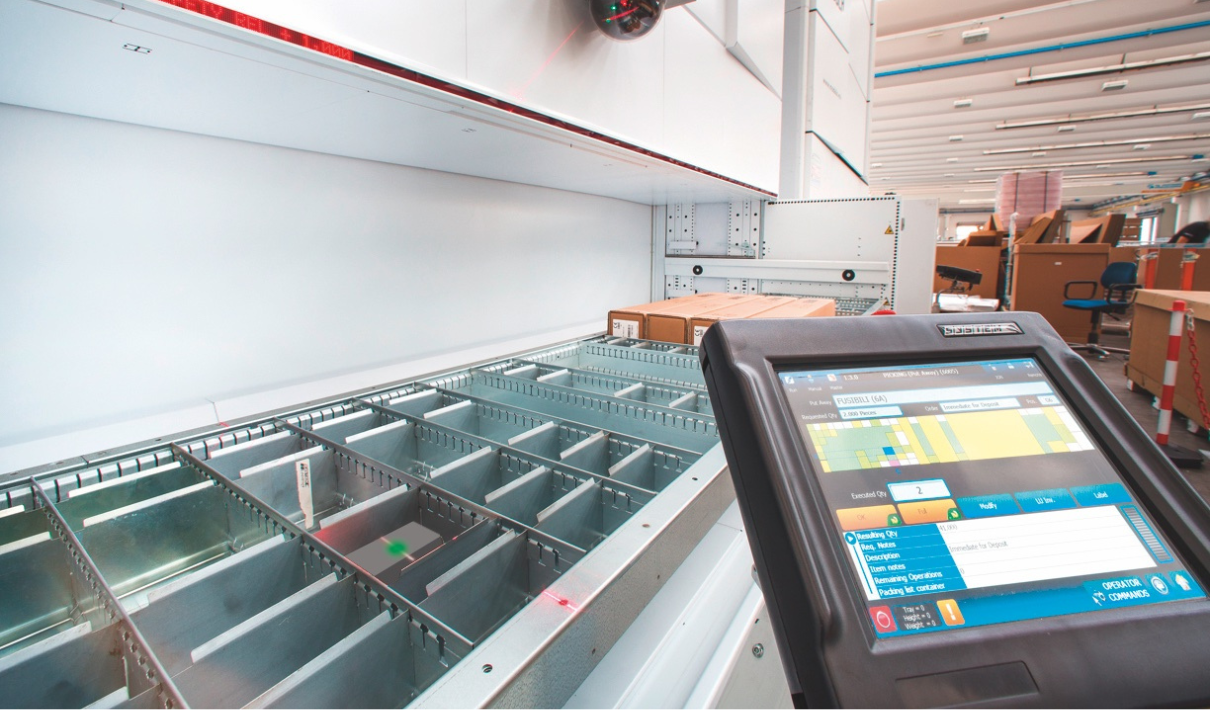
The Solution: Modula Vertical Lift Modules (VLMs) allow you to store these large influxes of goods in a compact, high-density footprint. By utilizing vertical height, you can accommodate the “safety stock” required for international operations without expanding your facility.
Reclaim your floor space.

Ensuring Accuracy for Customs and Compliance
Accurate inventory data is essential for customs reporting and duty calculations.
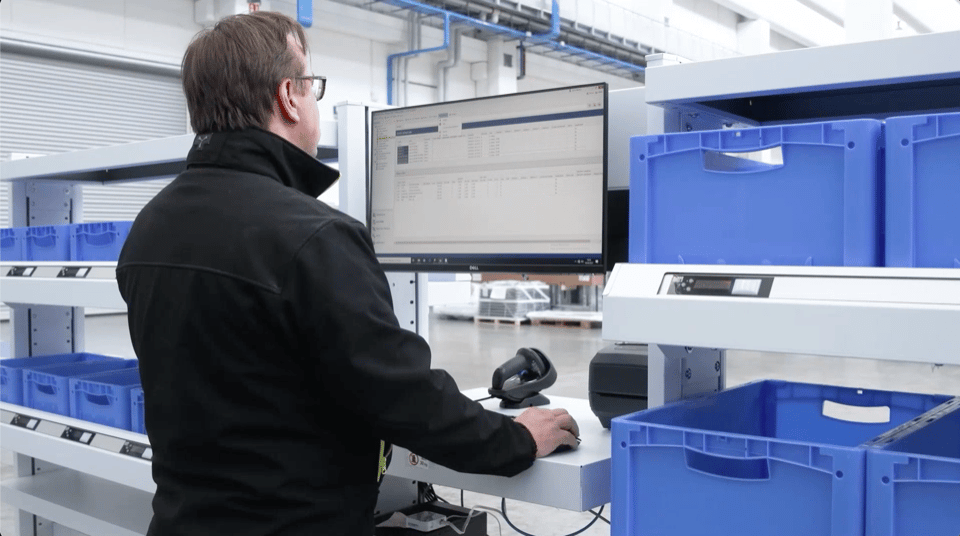
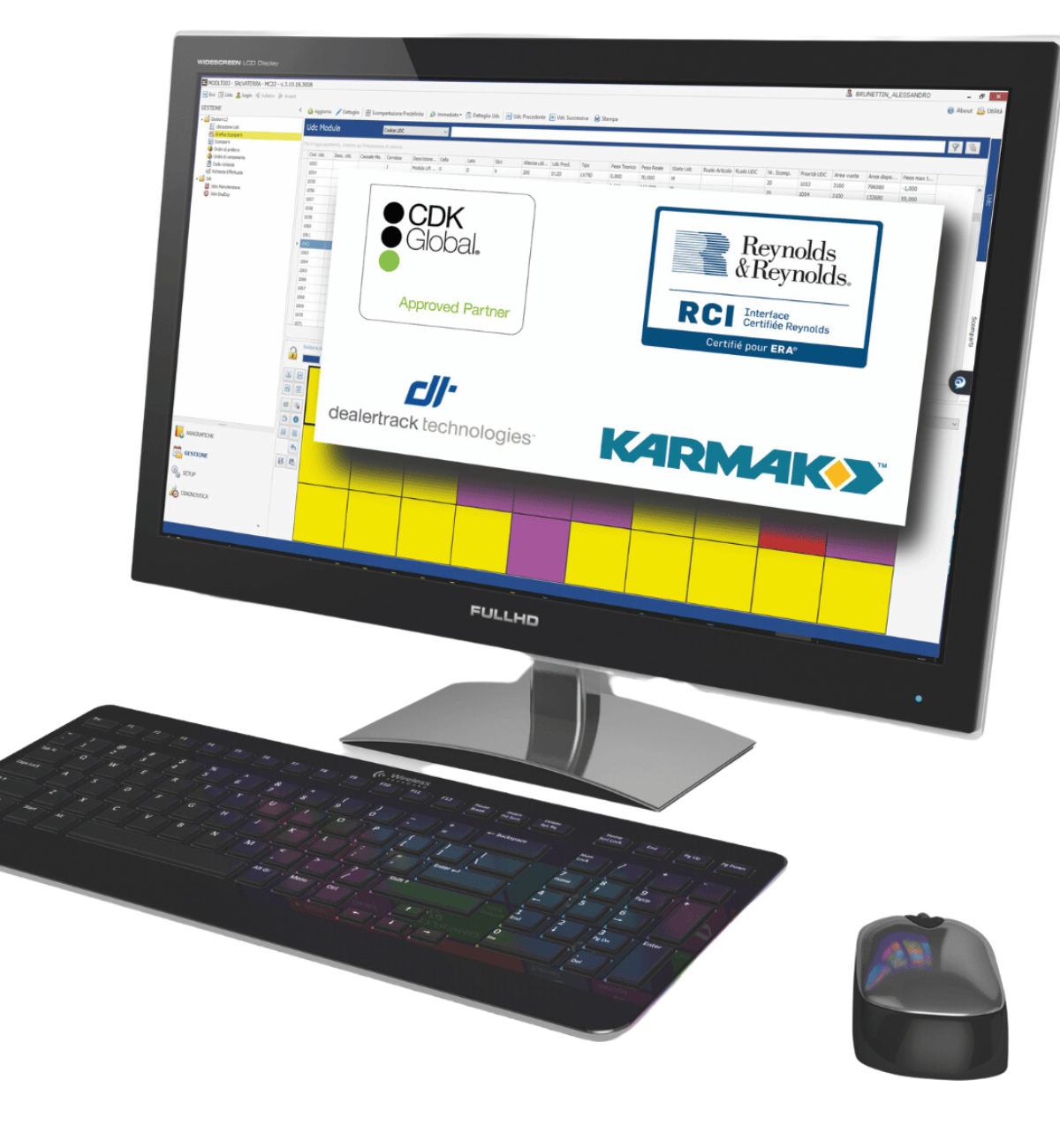
- The Solution: The Modula Warehouse Management System (WMS) provides absolute inventory precision. It tracks lot numbers, serial numbers, and country of origin for every item. This ensures that your digital records match physical stock perfectly, simplifying customs audits.
Reduce costs and delays in global shipping.
Global Visibility with IoT
Managing warehouses in different countries requires remote oversight.
- The Solution: Modula IoT provides a cloud-based dashboard that allows logistics managers to monitor the performance, status, and stock levels of their automated warehouses anywhere in the world, ensuring consistency across global operations.
Manage your automated warehouses anywhere in the world

International Logistics Explained: Key Takeaways
- International logistics is the engine of global trade, but it requires navigating complex regulations, longer transit times, and geopolitical risks.
- Success depends on mastering the four core processes: handling, transportation selection, freight movement, and customs clearance.
- Real-time international logistics tracking is essential for maintaining visibility and managing customer expectations across long distances.
- Automation is the key to efficiency. From automated documentation to high-density Modula VLMs that handle bulk inventory, technology reduces risk and lowers the cost of global operations.
International Logistics: FAQs
What’s the difference between international and domestic logistics?
International logistics and transportation involve moving goods across borders and navigating customs, duties, and compliance in multiple countries.
In contrast, domestic logistics deals with shipments within one country and is typically faster and less complex.
What documents are required for international shipping?
Essential documents include a commercial invoice, packing list, bill of lading, and certificate of origin.
Most international logistics companies also recommend country-specific customs forms to prevent delays or rejections at the border.
How can I reduce shipping delays across borders?
Effective inventory management for B2B order fulfillment starts with real-time visibility across storage locations.
Using a WMS like Modula WMS, businesses can:
- Track inventory levels
- Assign SKUs to specific zones
- Automate replenishment based on order frequency
Forecasting demand, allocating safety stock, and syncing systems with ERP and EDI platforms are also key to preventing stockouts and meeting SLA commitments.
What are the B2B fulfillment strategies for recurring orders?
Accurate documentation, proactive communication with customs, and real-time international logistics tracking are key.
Many operations rely on trusted international logistics services or 3PLs to streamline operations and reduce the risk of disruptions.
Should I work with a 3PL for international logistics?
Absolutely. Partnering with an experienced international logistics company gives you access to global networks, compliance expertise, and multi-modal shipping solutions.
Top international logistics companies also offer tech-driven platforms that improve visibility and responsiveness across your supply chain.