Safety Stock Formula: How To Calculate the Right Amount
Global supply chains remain under pressure, and businesses are responding with new strategies to stay resilient.
According to a recent McKinsey Supply Chain Risk Pulse Survey, over 70% of supply chain leaders plan to build safety stock inventory in response to ongoing disruptions, especially those triggered by tariffs, transportation delays, and geopolitical uncertainty.
That shift underscores a renewed focus on safety stock; the extra inventory retailers and manufacturers keep on hand to guard against unexpected issues, like supplier delays or sudden increases in demand.
In this guide, we will:
- Explain what safety stock is and why it matters
- Show you how to calculate safety stock formula
- Explore the leading causes of stockouts and how to prevent them
- Discover how modern automation and WMS software keep your inventory perfectly balanced
How To Calculate Safety Stock Formula
So, how much safety stock should you carry at any given time? While it might be tempting to rely on a rough estimate, unsupported assumptions can lead to costly overstocking, or worse, critical stockouts.
If you stock too much, you’re stuck with higher carrying costs, a greater risk of damage or theft, and the chance that items might expire before they’re used.
However, if you don’t carry enough, even a minor supply chain disruption, especially in international logistics, can cause unexpected delays, lost sales, and unhappy customers.
If calculations aren’t your strong suit, here’s a simple way to figure out how much safety stock inventory your eCommerce operations need.
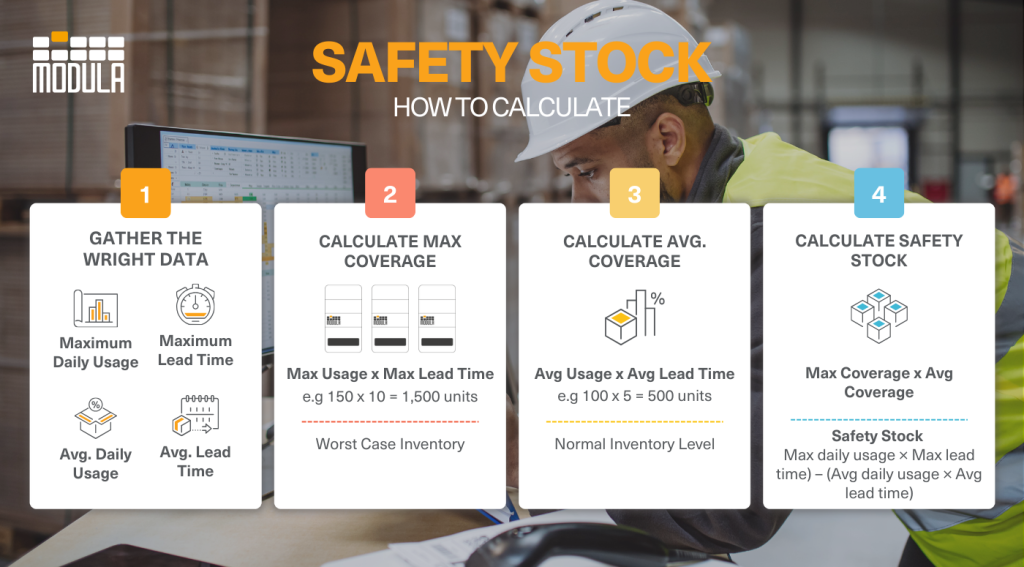
Collect Data for each SKU
Before you plug anything into a formula, gather these metrics for each SKU:
- Maximum daily usage: The absolute highest number of units consumed or sold in a single day.
- Maximum lead time: The longest delay you’ve ever experienced from a supplier (e.g., during a raw material shortage or port strike).
- Average daily usage: Your normal, day-to-day consumption rate.
- Average lead time: The standard number of days it takes for a supplier to deliver under normal conditions.
If you place orders weekly (or on any other schedule), feel free to swap “daily” for your actual ordering cycle.
To get your averages and maximum, look at historical data. Here is how this works in practice, depending on your industry:
- For an eCommerce Fulfillment Center: If you typically ship 100 units of a SKU per day and it takes 5 days to restock. Those are your averages. But what if a Black Friday sale pushes you to ship 150 units in a single day, and a holiday supply chain slowdown forces you to wait 10 days for a restock? Those are your maximums.
- For a Manufacturing Plant: If your assembly line normally consumes 100 components a day with a 5-day supplier lead time, those are your averages. But if a peak production run requires 150 components in a single day, and a global raw material shortage delays your supplier by 10 days, those are your maximums.
Calculate Your Max Coverage
Start by multiplying your maximum daily usage by your maximum lead time.
Think of this as your worst-case scenario: what if you hit your highest sales or production day and your supplier takes the longest time ever to restock?
This number gives you the upper limit of what you might need on hand to avoid stockouts when things don’t go as planned. It’s your safety cushion.
Compute Your Average Coverage
Next, multiply your average daily usage by your average lead time.
This gives you a solid baseline: what you would typically need to reorder under normal conditions, based on average sales and standard supplier turnaround times.
Subtract
Now subtract your average coverage from your max coverage using this formula:
Safety stock = (Max daily usage × Max lead time) – (Average daily usage × Average lead time)
The result is your inventory safety stock. It might not cover a massive sales spike, but in most cases, it’ll be enough to keep you from running out of stock when demand or delays creep above normal.
Common Causes of Stockouts and How to Avoid Them
Even the most organized eCommerce businesses and industrial facilities can get blindsided by stockouts.
It’s not always a matter of poor planning, but sometimes, it’s the hidden gaps in your operations.
Here are some often-overlooked causes and what you can do to stay one step ahead.
Inaccurate Demand Forecasting
If your forecasts are off, you could end up understocked.
The fix? Use better tools and real-time data to fine-tune your forecasts.
The more accurate your predictions, the better your chances of having the right inventory on hand when customers are ready to buy.
Unexpected Demand Spikes
A sudden surge in B2B orders or a viral consumer trend can quickly wipe out your inventory
While you can’t always predict when demand will jump, keeping an eye on trends, promotions, and even macroeconomic shifts can help you spot early signs and prepare accordingly.
Poor Inventory Management
Lost, damaged, or miscounted stock can all lead to preventable stockouts.
For instance, if a receiving error causes a short shipment, or your inventory gets damaged without anyone noticing, you could suddenly find yourself short on essential SKUs.
To tighten up your inventory processes, run regular audits and use a reliable inventory management system that tracks stock levels and product movement from end to end.
Reordering Too Late
Waiting until you’re nearly out of stock to reorder is risky. If your replenishment arrives late, you could miss sales, or worse, frustrate loyal customers.
Modern inventory software can help by setting up automatic reorder alerts based on SKU-specific thresholds.
When set up correctly, these reminders make sure you restock right on time, before stock runs dangerously low.
Natural Disasters and Transit Issues
Unexpected events like natural disasters or geopolitical tensions can wipe out inventory.
One way to reduce the risk? Spread your inventory across multiple warehouses or fulfillment centers. That way, if one location is impacted, you can still ship from another and keep orders flowing.
Overselling Across Channels
Selling on multiple platforms is great for growth, but it can also lead to unintentional overselling.
Picture this: a customer buys your last unit on Amazon, and two minutes later, someone else orders it from your website. Now you’re in a bind.
The solution? Omnichannel visibility. With the right system in place, you can track inventory across every channel in real time.
This makes it easier to manage sales and avoid stockouts altogether.
| Cause | What Happens | How to Prevent It |
| Inaccurate demand forecasting | Poor sales predictions leave warehouses understocked when demand increases. | Use forecasting tools and real-time data to improve demand predictions. |
| Unexpected demand spikes | Promotions, seasonal demand, or viral trends quickly deplete inventory. | Monitor sales trends, marketing campaigns, and market signals to anticipate spikes. |
| Poor inventory management | Lost, damaged, or miscounted stock creates inaccurate inventory levels. | Conduct regular inventory audits and use a reliable inventory management system. |
| Reordering too late | Waiting too long to reorder increases the risk of running out before replenishment arrives. | Set automated reorder alerts based on SKU-level thresholds. |
| Natural disasters and transit issues | Weather events, geopolitical disruptions, or shipping delays interrupt supply. | Store inventory across multiple warehouses to improve resilience. |
| Overselling across channels | Selling across multiple platforms without synchronized inventory leads to overselling. | Use omnichannel inventory visibility with real-time stock updates. |
How Automation Improves Safety Stock Inventory and Accuracy
Getting safety stock numbers right isn’t just about risk management; it’s about maintaining agility in a supply chain that’s constantly shifting.
Modula’s automated storage solutions and inventory systems are designed to anticipate those shifts, helping your operation stay one step ahead with real-time visibility and precise tracking of items.
By combining real-time data, advanced tracking, and automated workflows, including safety stock reorder software, Modula gives you the tools to set smarter inventory levels, and adjust instantaneously when things change.
Here’s how it works:
Gain Real-Time Inventory Visibility
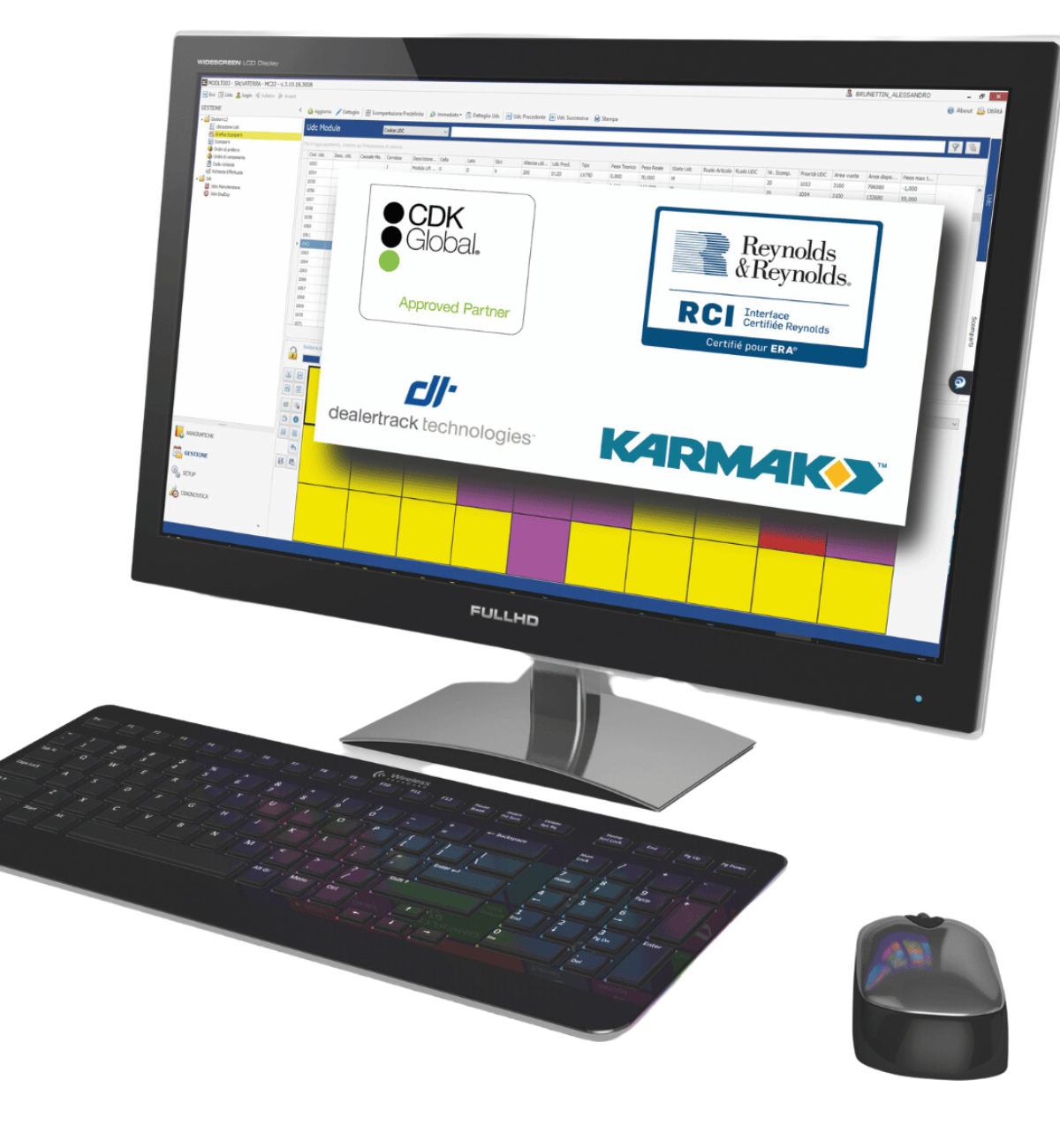
Modula’s Warehouse Management System (WMS) connects directly to your automated storage units, giving you real-time access to stock levels across every SKU and location.
This centralized visibility is critical for tracking usage trends and setting accurate inventory thresholds.
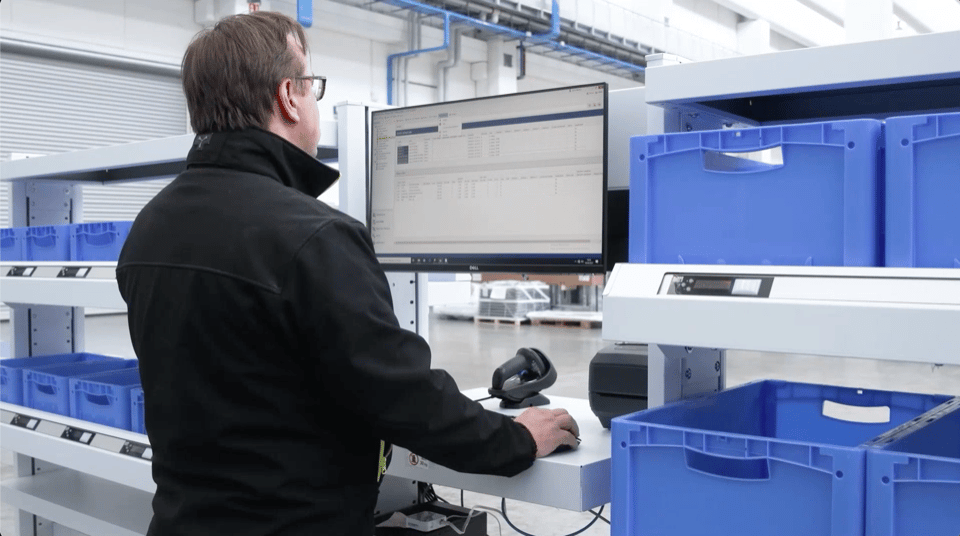
Monitor stock levels in real-time
Eliminate Errors at the Source
Manual tracking often leads to miscounts, misplaced items, and inventory inaccuracies that throw off your inventory calculations.
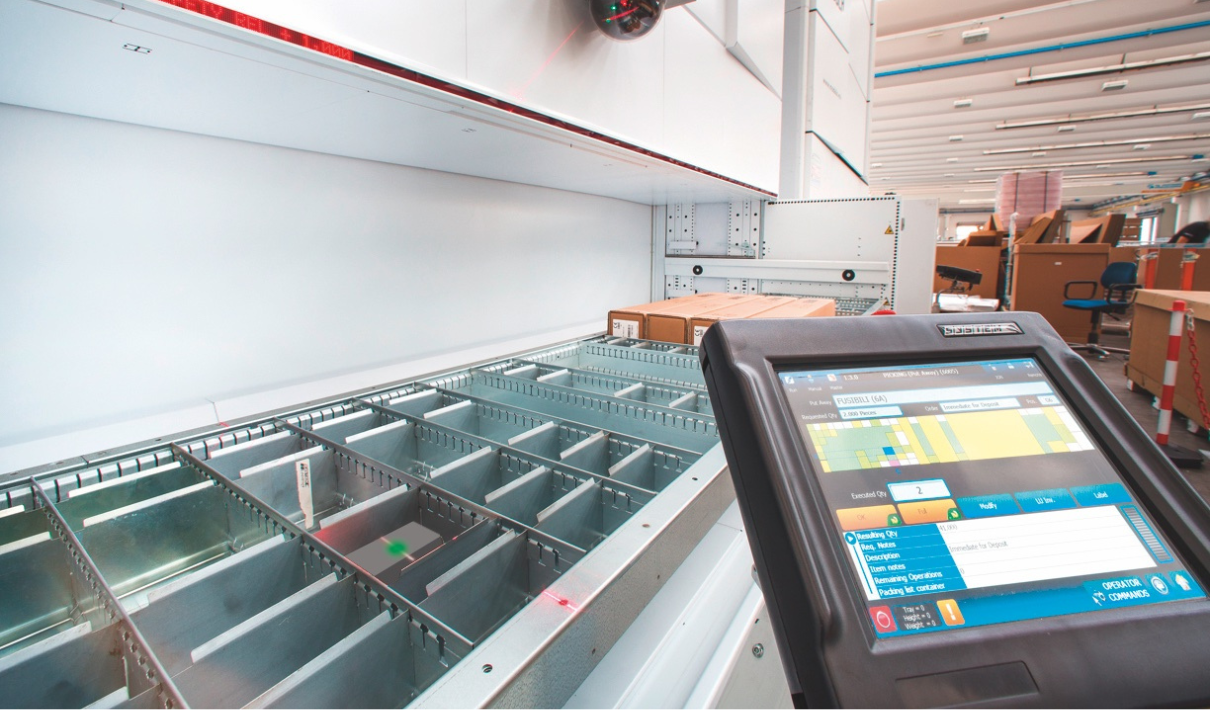
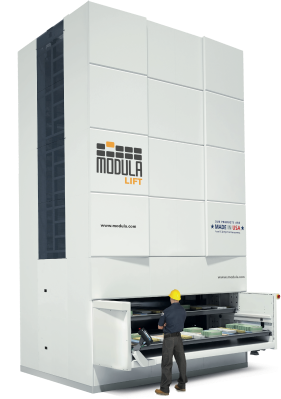
With Modula Lift, inventory is automatically stored, retrieved, and recorded with each transaction. That precision ensures your data is always up to date.
For industries where precision is a must, Modula Next takes it a step further by using a shutter system that only opens the specific compartment needed, making picking errors physically impossible.
Automate Reorder Points and Alerts
When stock hits critical levels, you need to act fast.Modula WMS and Modula Web Analytics provides automated alerts and advanced analytics so you can reorder before safety stock runs out.
With usage history, turnover rates, and lead times all visible in one platform, replenishment becomes proactive, not reactive.
Maximize Space Without Expanding Footprint
Need room for extra stock but don’t have space to spare? Our vertical lift modules (VLMs) and horizontal carousels (HCs) make it easy to store safety stock efficiently across tight floor plans.
It keeps critical inventory accessible and organized, without requiring costly expansions or offsite storage.
Protect Sensitive Stock
In sectors like Pharma or Food, safety stock must be protected from more than just delays. Modula provides Cleanroom and temperature-controlled solutions to ensure your buffer inventory remains in perfect condition, regardless of humidity or temperature shifts.
Accelerate Order Fulfillment
During a demand spike, speed is everything. Modula Flexibox is a bin-based VLM configuration designed for high-speed, small-item picking.
By using standardized bins and a “Buffer Bay” system that prepares the next tray while the operator is still picking, it dramatically increases throughput. This allows you to process high volumes of safety stock items much faster than a traditional tray setup.
Get more out of your warehouse space with Modula.
Safety Stock: Key Takeaways
- What is safety stock inventory? Safety stock refers to the inventory kept on hand to protect against unexpected demand spikes or supply chain delays
- It acts as a safeguard: It acts as a safeguard when demand exceeds forecasts, or replenishment takes longer than usual
- Data is everything: To maintain the right amount of safety stock, warehouse operations must gather accurate data and apply a clear, reliable formula
Safety Stock: FAQs
What is safety stock?
Safety stock is extra inventory set aside to protect against unexpected demand surges, supplier delays, or inaccuracies in forecasting.
It serves as a safeguard, helping maintain consistent operations and meet customer expectations, even when the supply chain doesn’t go as planned.
What is the “right” amount of safety stock?
The right amount of safety stock is typically based on demand variability and supplier lead times.
It’s meant for short-term disruptions; not to serve as a long-term surplus or a year’s worth of extra inventory.
How is safety stock different from buffer storage?
Buffer storage and safety stock might sound similar, but they serve different roles within the supply chain.
Safety stock is designed to protect against external uncertainties, such as supplier delays or sudden spikes in customer demand.
It acts as a backup layer of inventory that helps businesses avoid stockouts when unexpected disruptions occur.
Buffer storage, on the other hand, helps manage internal operational challenges. Issues like machine downtime, process variability, or uneven production flow can slow operations down.
By keeping buffer inventory between stages, businesses can maintain a steady workflow and prevent delays from spreading across the production process.